Here's the thing nobody tells you about turning 40. Your body doesn't stop wanting sex. It just takes longer to feel it.
You might notice it as a gap. There's desire on the left. There's physical response on the right. And between them is this weird, frustrating lag that didn't exist at 25. Your brain is ready. Your body needs a minute.
Let's start with the physiology because it matters. Blood flow to genital tissue slows slightly as we age. Estrogen levels are still stable in your 40s (unless you're heading toward perimenopause), but even without major hormonal changes, the speed of arousal shifts. You need a few extra minutes for engorgement. Your clitoris takes longer to swell. Lubrication ramps up more gradually.
Then there's the neurological piece. Your brain is also changing. You're not as easily distracted by novelty. You need context. You think about your work email in the middle of foreplay. You wonder if you locked the car. These aren't failures of libido. They're features of a brain that's juggling 50 things.
The third piece is muscle. Your pelvic floor has been aging along with the rest of you. It's slightly less elastic, which means it takes longer to relax fully into arousal. All of this compounds.
But here's what doesn't change: your capacity for pleasure. Your nerve endings are the same. Your clitoral tissue is the same. Your ability to orgasm hasn't gone anywhere. You just need different scaffolding to get there.
Most people experience slow arousal as a deficit. You're comparing yourself to how you felt at 28. You had spontaneous arousal. You wanted sex on a whim. Now you need 20 minutes of foreplay to even register interest. So you assume something is wrong.
What's actually happened is that your arousal has become more intentional. Sex has stopped being something that happens to you and started being something you choose. That's not worse. It's different. And many people find it more satisfying once they stop fighting it.
The problem arises when you're still using the framework of quickfire arousal. You expect the same 5-minute warm-up. You get frustrated when it doesn't happen. You might even start avoiding sex altogether because the gap feels too wide.
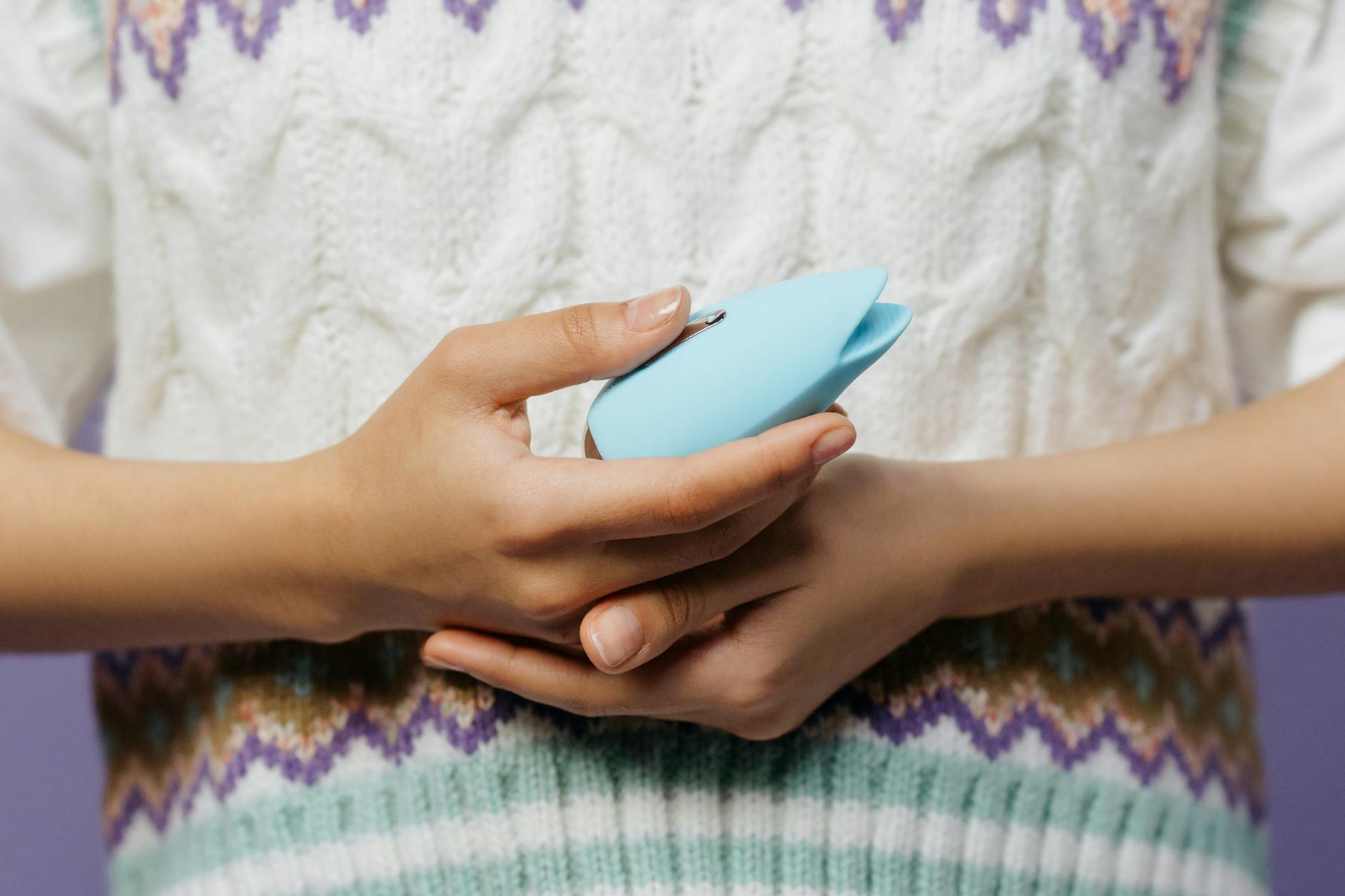
That's where tools like lemon clitoral vibrators shift the equation. They're not a workaround. They're a translator between your desire and your body's actual response time.
The suction-based design of a lemon vibrator is specifically helpful for this. Unlike traditional vibrators that rely on direct friction, the lem vibrator creates rhythmic pressure and release. This mimics natural arousal patterns but amplifies them. You get the sensation of blood rushing to tissue without having to generate it all yourself.
Start on a lower setting for 30 to 45 seconds. Most people with slower arousal find that the first few moments don't feel like much. That's normal. You're not numb. Your tissues are just waking up. By minute three or four, engorgement starts. By minute seven, you've got real sensation. By minute ten, you're often in a completely different state than when you started.
This matters: you're not trying to force instant arousal. You're giving your body the signal to begin while you build mental anticipation. The vibrator is working. Your nervous system is preparing. Your clitoris is engorging. And because you're not white-knuckling it or wondering if something's wrong, your brain can stay in the game.
Slow arousal thrives on context. You can't rush this part.
Set aside actual time. Not "we'll try if we're not too tired tonight." Real, protected time. Even 30 minutes shifts everything. Your nervous system gets the signal that this is intentional. You're not squeezing it into a gap between chores. Your brain can actually participate.
Warming up your environment helps too. Temperature affects blood flow. If you're cold, arousal is slower. Dim lighting, a comfortable temperature, maybe music or a scent you like. This isn't luxury nonsense. It's physiology. Your body responds better when it feels safe and attended to.
Consider your partner dynamic if you're with someone. If they're watching anxiously waiting for you to be "ready," that's the opposite of helpful. Reframe: you're not trying to achieve arousal on a timeline. You're exploring sensation together. Maybe they're using a lemon vibrator on you while you focus on breath and what actually feels good. Maybe they're on their phone for 10 minutes while you warm up solo. The goal is presence and patience, not performance.
Here's what I see work over and over: start before you think you need to.
Don't wait until you feel desire and then reach for the lem vibrator. Begin 10 or 15 minutes earlier. Start with touch. Light touch on your thighs, your neck, your breasts. Let your nervous system know something is happening. Your body begins a slow shift toward parasympathetic arousal.
Then introduce the lemon vibrator. Settings 1 or 2. Apply it to your outer labia first, not directly on your clitoris. This is gentler. It allows sensation to build gradually. After three to five minutes, move to the clitoral area. Stay with a lower setting longer than you think you need to. Your tissues are continuing to engorge. Your clitoris is getting firmer. Sensation deepens.
Only then move to a higher setting if you want to. Many people find they don't need to. The combination of time plus lower intensity creates waves of sensation that feel deeper and more complex than higher vibration alone.
If you're starting the lemon sucker style vibration and noticing numbness or that your clitoris feels overstimulated quickly, that's a sign to back off intensity or add a break. Some people need 60 seconds on, 30 seconds off. Some need lubrication even when there's natural lubrication (silicone-based lube can reduce that small amount of friction that sometimes feels jarring). Some find they need to engage mentally as well. Arousal in your 40s isn't just physical. It's cognitive. You might need to think about something that genuinely turns you on. That's not a failure. That's how your nervous system works now.
If arousal remains totally flat after 15 or 20 minutes of genuine effort, that's worth paying attention to. Slow arousal is normal. No arousal after reasonable time and effort might signal something else. Stress, relationship disconnection, medication side effects, hormonal shifts heading toward perimenopause. None of those are emergencies. They're all addressable with the right support.
Many people find that slow arousal feels entirely different when they're alone versus with a partner. You're not performing. You're not managing someone else's experience. Your nervous system can actually relax. This is worth protecting.
If you're partnered, solo time with a lemon clitoral vibrator isn't a replacement for partnered sex. It's an explorer's space. You get to figure out what your body responds to without an audience. You learn your own arousal patterns. Then you can communicate that back to your partner. Here's what I need. Here's how long it takes. Here's what helps.
If you're rebuilding intimacy after a relationship ends or after a long partnership gap, a lemon vibrator gives you a low-pressure way to reconnect with your own arousal. No judgment. No rush.
Slowness is one thing. Absence is another. If you're noticing that arousal isn't just slow but pretty much nonexistent, especially if this is new, it's worth investigating.
Stress is the biggest culprit. Your sympathetic nervous system (fight or flight) directly suppresses sexual response. If you're managing a major life transition, career pressure, or relationship strain, your body might have downshifted arousal as a survival mechanism. That's not broken. That's your nervous system protecting you. The fix is addressing the underlying stress, not forcing arousal.
Hormonal shifts can play a role even before full perimenopause. Some people experience arousal changes in their early 40s as a signal that hormonal shifts are beginning. That's worth checking with a doctor who listens.
Medications can alter arousal too. If you started something new around the time arousal changed, mention it to your prescriber. Alternatives often exist.
Relationship disconnection is real. If you're not feeling emotionally connected to your partner, your body won't feel sexually connected either. No vibrator fixes that. But therapy, honest conversation, or sometimes individual coaching can. When you feel disconnected from your body, reconnecting to pleasure can help bridge that gap.
Here's what I want you to know: arousal in your 40s isn't a decline. It's a recalibration. Your body needs more time. Your mind needs more context. Your nervous system needs more permission to shift into pleasure mode. That's not deficiency. That's maturity.
A lemon clitoral vibrator becomes a tool in that recalibration. It amplifies sensation in a way that meets your body where it actually is right now, not where you remember it being 15 years ago. It gives you tangible feedback while you're waiting for arousal to build. It lets you explore without pressure.
The secondary benefit is that using these tools intentionally teaches you patience with your own body. You stop fighting the timeline and start enjoying the journey. And that shift, more than anything mechanical, transforms the experience.
There's no universal timeline, but 10 to 20 minutes is more common than the 5-minute mark of your 20s. Some people find it takes even longer on particularly stressful days. The goal isn't a specific duration. It's feeling your own arousal building. If you're using a lemon vibrator and sensing more sensation after five minutes than you did at minute one, you're on track.
Absolutely. The suction-based design is actually gentler than traditional vibrators for people with reduced sensation because it creates broader stimulation rather than direct friction. Start on the lowest setting and give your tissues time to wake up. That initial numbness often clears in the first few minutes.
Not necessarily. Perimenopause brings hormonal fluctuation and often irregular cycles, not just slower arousal. Slow arousal in your 40s happens for lots of reasons: stress, relationship dynamics, medication, or just how your body works now. If you're experiencing other shifts like irregular periods or night sweats, that's worth discussing with a doctor. When vaginal dryness worsens with hormonal changes, that's sometimes a signal. Slow arousal alone, though, isn't diagnostic.
No. Your body doesn't become dependent on vibrators. Your arousal capacity doesn't atrophy. What does happen is that you learn what feels good and what you need. Some weeks you'll want a vibrator. Some weeks you won't. Both are fine and both are still your natural arousal.
This one requires honest conversation outside the bedroom. Your arousal changing isn't the same as your attraction changing. Lots of people stay deeply attracted to their partner while their body's response time shifts. The fix is separating those two things in the conversation. "My arousal takes longer now, and that's about my body, not about you" is a start. Then decide together how to work with that. Maybe your partner participates in the longer warm-up. Maybe you have solo time first. Maybe you use a lemon vibrator together. The key is moving from "something's wrong" to "here's what we're working with."
Yes, absolutely. Dehydration and lack of sleep tank arousal. A glass of wine might help you relax initially, but more than one usually suppresses physical response. Caffeine can help you feel more alert and present. These aren't magical fixes, but they're part of the context. If you're running on three hours of sleep and stress, your arousal will be slow no matter what tool you're using.
Slow arousal in your 40s isn't a problem waiting for a solution. It's an invitation to slow down and pay attention to what your body actually needs. A lemon vibrator, used thoughtfully, becomes part of that attention. Not a shortcut around patience, but a way of deepening into it. Your pleasure matters. Your timeline matters. And your body, exactly as it is right now, matters.