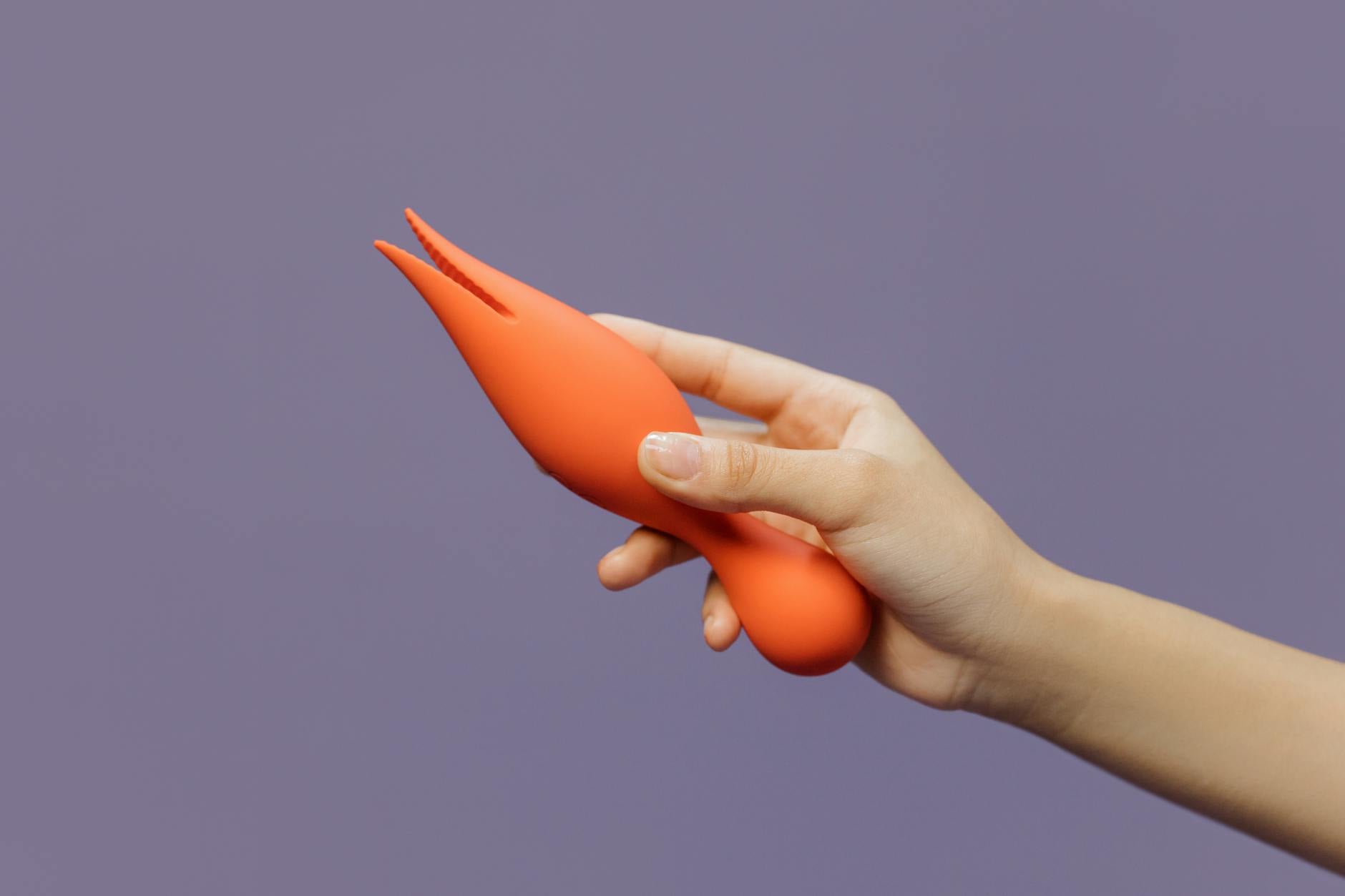
How to Use a Lemon Vibrator When Arousal Takes Longer to Build
Arousal slowdown is real, common, and completely fixable. Here's why it happens, what actually helps, and how extended foreplay transforms the experience.
At some point, sex starts to take longer. Not in a bad way. Just differently. Your body needs more time to warm up, your mind takes longer to quiet down, and what used to happen in five minutes now needs fifteen. Most people assume something's broken. It's not. It's actually information.
Here's what I see in my practice: arousal slowdown is one of the most common complaints I hear, and one of the easiest to fix once you stop fighting it and start working with it instead.
There are several reasons your body might be taking longer to respond to stimulation, and most of them are completely normal.
Stress is the biggest culprit. When your nervous system is activated by work, parenting, finances, or relationship friction, your body deprioritizes sexual arousal. That's not a malfunction. That's your brain keeping you in survival mode. You can't simultaneously worry about bills and have an orgasm. Your brain won't let you.
But stress isn't always obvious. Sometimes it's background noise. You're not consciously thinking about work, but your nervous system hasn't fully downshifted. Your shoulders are still high. Your jaw is tight. And then sex happens, and your body's confused about whether it's supposed to relax or prepare for a threat.
Hormones matter too. If you've experienced major life transitions (relationship changes, medication shifts, or simply aging), your body's chemical landscape has shifted. That changes how quickly arousal builds.
Then there's mental load. After years together, the brain's novelty response flattens. Your partner's touch is familiar, which is beautiful and also means your nervous system doesn't light up the same way it did when everything was new. This isn't death of desire. It's a transition into a different kind of arousal that requires different conditions.
Here's the thing: foreplay isn't a warm-up round before the real event. Extended foreplay IS the event, and reframing that changes everything.
When you give your body twenty to thirty minutes of non-goal-oriented touch before any genital stimulation happens, three things shift. First, your nervous system fully downregulates. Your breathing slows. Your blood pressure drops. Your brain stops scanning for threats. You actually relax.
Second, blood flow gradually redistributes to your genitals. Arousal isn't instant. It's a cascade. Your skin gets more sensitive. Your clitoris engorges. Your vaginal tissue lubrication increases. This takes time, and rushing it doesn't speed it up. Honoring it does.
Third, your brain gets permission to be present. When you've removed the performance pressure (the ticking clock, the expectation that orgasm should happen by minute seven), your mind actually joins your body. You stop thinking about whether you're taking too long and start feeling what's actually happening.
That's where the real arousal lives. Not in speed. In presence.
This is where tools like the Lem fit in. A lemon vibrator works differently than your hand or a partner's hand because it provides consistent, sustained stimulation without fatigue. Your partner can't do thirty minutes of manual stimulation. Their fingers get tired. Their shoulder aches. But a vibrator can.
What that actually means: extended foreplay becomes feasible. Instead of twenty minutes of escalating touch that ends because someone's exhausted, you now have a tool that lets the pleasure expand for as long as you want.
The air-suction design of a clitoral vibrator (like the Lem from Shop Lemon Toys) is particularly useful here because it doesn't require direct, intense friction. It works through gentle suction and pulsing patterns. For someone whose arousal is building slowly, this is gentler than vibration alone, which can feel jarring if you're not fully warmed up yet.
Start on pattern 1 or 2. Most people assume you need maximum intensity to feel sensation, but when arousal is slow to build, starting low and letting intensity gradually increase mirrors your body's actual pace. You're not rushing yourself. You're meeting yourself where you are.
Honestly, the physical techniques matter less than the permission structure. Most people with slow arousal are operating under a belief that something's wrong. "Why does this take so long? Why can't I just turn on and get going like I used to?"
That internal monologue is the actual barrier. Because the moment you start questioning your body's pace, you pull your attention out of sensation and into judgment. And judgment kills arousal faster than anything.
Instead, try this reframe: "My body takes longer to warm up. That's not a flaw. That's information about what I actually need to feel good." The shift from "Why is my body broken?" to "What does my body need?" is everything.
What your body likely needs is time. Permission. Presence. A partner (or yourself) willing to spend thirty, forty, even sixty minutes on pleasure without the goal of an orgasm by the end.
When you remove the finish line, arousal often arrives faster than you'd expect.
If you're working with a partner, have the conversation before you're in bed. "I've noticed my arousal takes longer to build now. I want to try something different." That's not a complaint about them. That's a request for collaboration.
Specific things that help:
Start with non-sexual touch. Hands, massage, kissing, skin-to-skin contact with no genital agenda. Fifteen to twenty minutes of this. Your nervous system genuinely needs it.
Then transition to more intentional stimulation. This is where a lemon vibrator can join. Your partner can use it on you, or you can use it while they're touching you elsewhere. The combination of internal and external touch, or vibration paired with manual touch, often helps arousal deepen faster than either alone.
Communicate openly about pace. "That feels good, but slower" or "I want more of that" or "Let's stay here for a while" are all valid mid-sex sentences. Your partner isn't a mind reader, and they'd rather know what works than guess.
Remove the clock. The biggest killer of slow arousal is someone (usually the person experiencing it) watching the time and wondering how much longer this will take. Give yourself permission to spend as long as you need. Seriously. An hour is fine. Ninety minutes is fine.
Sometimes slow arousal is just your body's natural pace now. Sometimes it's a sign that something else needs attention first.
If arousal has disappeared almost entirely, that's different from taking longer. Complete loss of desire often signals stress, relationship disconnection, unresolved conflict, or sometimes medical factors like low testosterone or depression. That needs a different conversation, probably with a therapist or doctor.
If arousal only takes longer with your partner but not during solo play, that's information about the relationship dynamic, not your body. That's worth exploring with a couples counselor.
But if arousal just takes more time than it used to, and you can still get there? That's not pathology. That's your body asking you to slow down.
Here's what I've learned in my practice: people who accept slow arousal instead of fighting it often report the best orgasms of their lives. Not quick ones. Deep ones. Full-body ones. Ones that feel like they actually come from somewhere, not just a mechanical release.
That shift happens because you've finally given your body permission to do what it's built to do: take its time, build slowly, and arrive at sensation in its own way.
A lemon clitoral vibrator is just a tool that makes that possible. The real work is the mindset shift: arousal slowdown isn't a problem to fix. It's an invitation to discover what pleasure actually feels like when you stop rushing.
There's no magic number, but twenty to thirty minutes is a good starting point if you're coming from rushed sex. Some people need longer. Some need less once they realize they can breathe and relax. The real metric is how your body feels, not the clock. If you're genuinely aroused and ready, twenty minutes is plenty. If you're not, no amount of time will force it.
Not exactly. But it can remove barriers to arousal by making extended stimulation feel less effortful for your partner and less pressured for you. The actual speedup comes from giving your nervous system the time it needs to downregulate. The vibrator just makes that time sustainable and enjoyable.
Not necessarily. Slow arousal can definitely signal relationship friction, but it's also super common with long-term partners even when the relationship is solid. Your nervous system has habituated to them, which is normal and not romantic failure. It just means you need different conditions to light up again.
That's a real problem, and it's not about your body. It's about misaligned expectations and possibly his nervousness about his own arousal or performance. A conversation (or better yet, a couples therapist) can help you both understand what's actually happening and what you each need. You can't will arousal faster for his convenience, and you shouldn't try.
It's extremely common, especially after relationship changes, life transitions, or simply the shift from new-relationship novelty to long-term comfort. Some people experience it in phases. Some people's arousal has always been slower. Neither is abnormal. Both just need different conditions to work well.
Both work, depending on what you want. Solo play helps you understand your own pace without performance pressure. Partnered play with a vibrator can deepen connection if you're both on board. There's no "should" here. Try both and see what actually feels good.
Arousal that takes longer isn't broken. It's just different. And the moment you stop treating it like a problem and start treating it like information about what you actually need, everything shifts. Extended foreplay, tools like a lemon clitoral vibrator, stress management, and honest communication with your partner are all pieces. But the real piece is permission.
Your body knows what it needs. It's worth listening to instead of rushing.