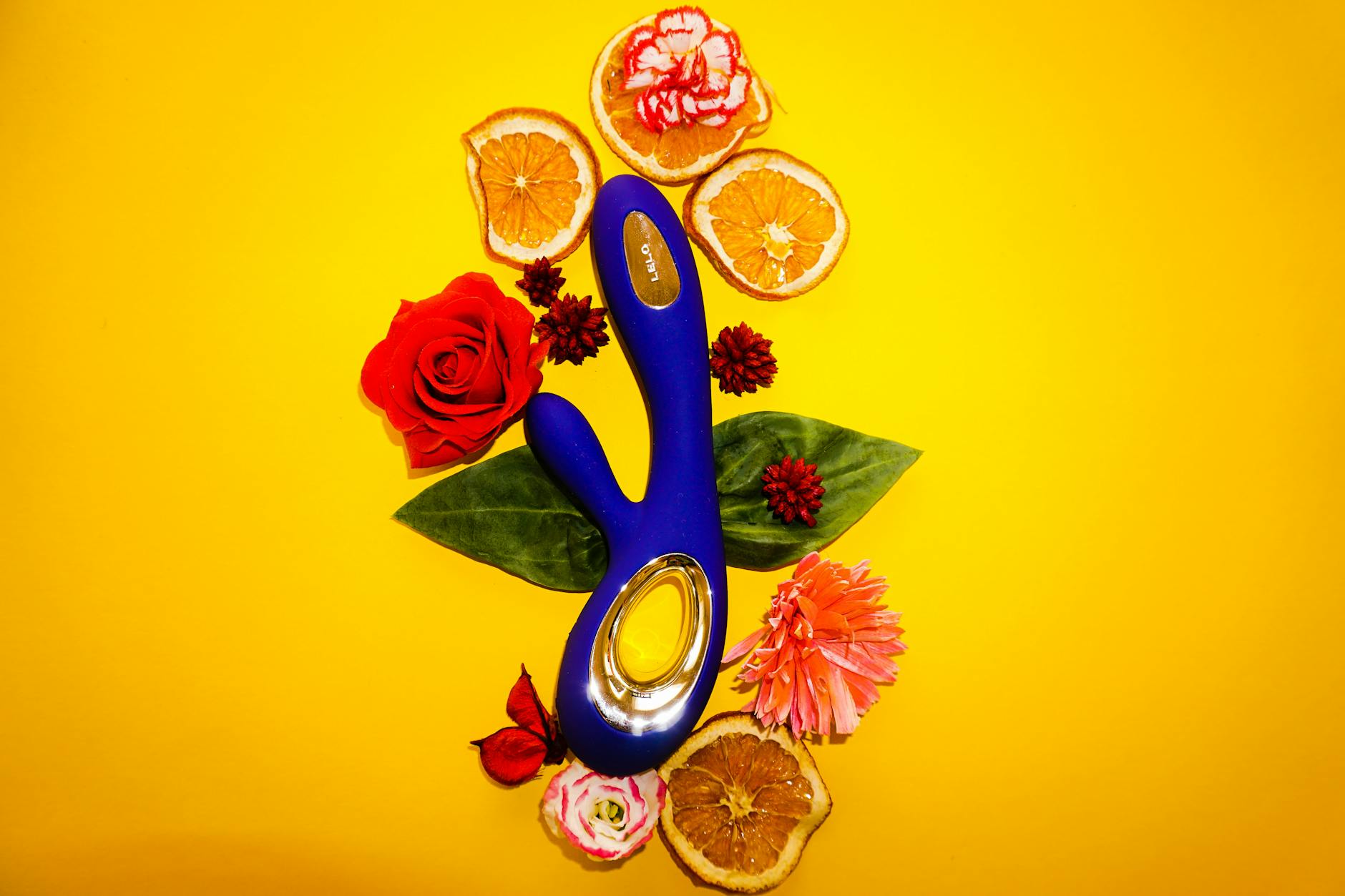
How to Use a Lemon Vibrator When You Feel Pressure to Orgasm Quickly
The anxiety of rushing through sex kills arousal. Here's how a lemon clitoral vibrator helps you slow down, stay present, and rediscover pleasure on your own timeline.
Orgasm anxiety is real, and it's a pleasure killer. You're watching the clock. Your partner is waiting. Or maybe you've internalized the message that good sex means quick climax. Whatever the source, that pressure sits in your nervous system like a weight, making actual arousal nearly impossible.
Then you don't come, which confirms the anxiety, which makes next time harder. It's a loop.
A lemon clitoral vibrator breaks that loop because it shifts the entire frame. Instead of trying to rush toward a finish line, you're exploring sensation in real time. No timeline. No performance metrics. Just your body and what actually feels good.
Your brain and your genitals are not separate systems. When your brain is in performance mode, your parasympathetic nervous system (the one responsible for arousal and orgasm) downshifts. Blood doesn't flow the same way. Sensation feels muted. Orgasm becomes harder to reach, not easier.
This is especially true for people with clitorises. Clitoral arousal requires sustained focus and a genuine sense of safety. The moment you're thinking about whether you're taking too long, whether your partner is bored, or whether you should just fake it to end the pressure, your nervous system registers threat. Arousal collapses.
Research on sexual satisfaction shows that people who focus on sensation and pleasure rather than orgasm as an endpoint actually experience orgasms more reliably and more intensely. The paradox is real. Stop chasing it, and it comes.
A lemon clitoral vibrator gives you three things performance pressure won't:
First, physical control. You're driving the intensity, the rhythm, the pattern. Not your partner's timeline. Not some arbitrary cultural standard. You. This matters because it immediately removes the power dynamic that creates pressure in the first place.
Second, permission to explore. Instead of "I need to orgasm," the internal monologue becomes "What does this feel like?" "What happens if I shift the angle?" "Do I like this pattern or that one?" Curiosity replaces performance anxiety. Your brain shifts from threat mode to explorer mode.
Third, a clear separation between partnered sex and solo pleasure. You can use a lemon sucker during sex with a partner, sure. But you can also use it alone, without any audience, with zero expectation except to feel good. That separation is healing. It teaches your body that you can have pleasure that exists for its own sake, not in service to someone else's pleasure or timeline.
If you're feeling pressure to climax quickly, here's what I recommend:
Start solo, not partnered. Your first few times with a lemon vibrator should be alone. This isn't forever, but it's essential. You need to learn your own rhythm without any external pressure. Set aside 20-30 minutes with zero interruptions. Phone away, locked door, the whole thing.
Begin at a low intensity. Many people new to vibrators start at pattern three or four. Start at one or two. Let yourself feel the sensation before you ramp up. Rush here, and you're recreating the exact performance pressure that got you into trouble.
Don't set an orgasm goal. I know this sounds contradictory, but set a sensation goal instead. "I'm going to spend 15 minutes exploring what this feels like" is infinitely more useful than "I need to come in ten minutes." Notice the difference in your nervous system. One of those statements feels like threat. The other feels like play.
Take breaks. If you feel yourself tightening up or rushing, pause. Breathe. Notice what your body is doing. Arousal isn't linear. It builds and softens and builds again. That's normal. That's not failure.
This is where communication actually matters. Not the awkward conversation before sex. The real conversation: What do you want to happen here?
You might say: "I want to use this because it helps me feel less anxious about timing. I like taking my time." That's information your partner needs. It reframes the vibrator from "substitute for my body" to "tool that helps me relax and be more present."
Some people find that introducing a lemon clitoral vibrator into partnered sex actually deepens connection because the pressure evaporates. Instead of performing, you're present. Instead of watching the clock, you're watching each other. That shift changes everything.
If your partner has been the source of the pressure (either explicitly or just through their visible impatience), a vibrator can help reset the dynamic. It says clearly: "I need to do this my way, on my timeline." That's not rejection of your partner. It's actually the opposite. It's saying I want to be fully here, fully aroused, fully present. And I need to do it this way.
Using a lemon vibrator to slow down and reclaim your pleasure doesn't just change sex. It changes how you relate to your body in general. You start trusting your own signals. You start believing that your pleasure matters. You stop apologizing for the pace of your own arousal.
I've worked with clients who came to me feeling broken because they couldn't come quickly. Six weeks of slow, solo exploration with a vibrator, and the issue wasn't medical or psychological. It was permission. Their bodies were fine. They just needed to give themselves space to actually feel.
That permission ripples out. It affects how you ask for what you need in relationships. How you set boundaries. How you believe your "no" matters as much as someone else's "yes."
If the pressure to orgasm quickly came from a specific partner or encounter that was painful or non-consensual, a vibrator alone won't heal that. You'd benefit from working with a trauma-informed sex therapist. The tool is useful, but the underlying issue needs real support.
Similarly, if you're noticing that you feel pressure to perform in other areas of your life, sex becomes a symptom not the cause. That's work for a therapist, not a blog post. But addressing the performance pressure around sex can be a genuine starting point for recognizing that pattern elsewhere.
For straightforward cases where you're just stuck in the rhythm of rushing, a lemon clitoral vibrator and permission to slow down change things surprisingly fast. You might find that your most intense orgasms come when you stopped trying so hard to have them.
No, and the research backs this up. People who use vibrators report equal or higher satisfaction in partnered sex. The improvement comes from learning what actually feels good to your body. That knowledge transfers. You become a better communicator about your own pleasure, and that helps partnered sex too. If anything, understanding your own arousal makes partnered experiences richer.
That self-consciousness is usually a version of the same performance anxiety that got you here. You're imagining judgment even in solo time. The antidote is boring repetition. Use the vibrator ten times alone, and the self-consciousness usually fades. Your brain stops narrating and starts feeling. If shame persists, therapy can help you understand where that messaging came from.
It's completely normal, and it's increasingly common. The nervous system benefits from focused stimulation in a way that partnered touch often doesn't provide. That's not a flaw in your body or your relationship. It's just how sensation works. Many people need both forms of stimulation. That's not settling. That's knowing what actually works.
Most people notice a shift within three to five solo sessions. The key is consistency and genuine permission. If you're using the vibrator while still telling yourself "I should be coming by now," the pressure doesn't lift. But when you genuinely let go of the timeline, the change is fast. Your nervous system recognizes safety quickly.
Yes, and it's often helpful because it removes one layer of anxiety. If you're struggling with orgasm across contexts, a vibrator can help you explore sensation without pressure. But it might also be worth talking to a doctor or sex therapist to rule out medical factors or deeper patterns. A lemon clitoral vibrator is a tool, not a cure. But combined with patience and professional support if needed, it's a genuinely useful tool.
That's usually less about the vibrator and more about what it represents to your partner. It can feel like criticism of their ability to satisfy you. The frame that works is this: This isn't about you. This is about me learning what my body needs, so I can be more present with you. If your partner continues to feel threatened after that conversation, that might signal deeper insecurity or control patterns worth exploring with a couples therapist. Your pleasure shouldn't be contingent on your partner's ego.
Pressure to orgasm quickly is a form of control, even when it's self-imposed. A lemon vibrator helps you reclaim control of your own body and your own timeline. That's not just about better sex. That's about basic autonomy. Your pleasure matters. Your pace matters. The vibrator is just the tool that gives you space to remember that.