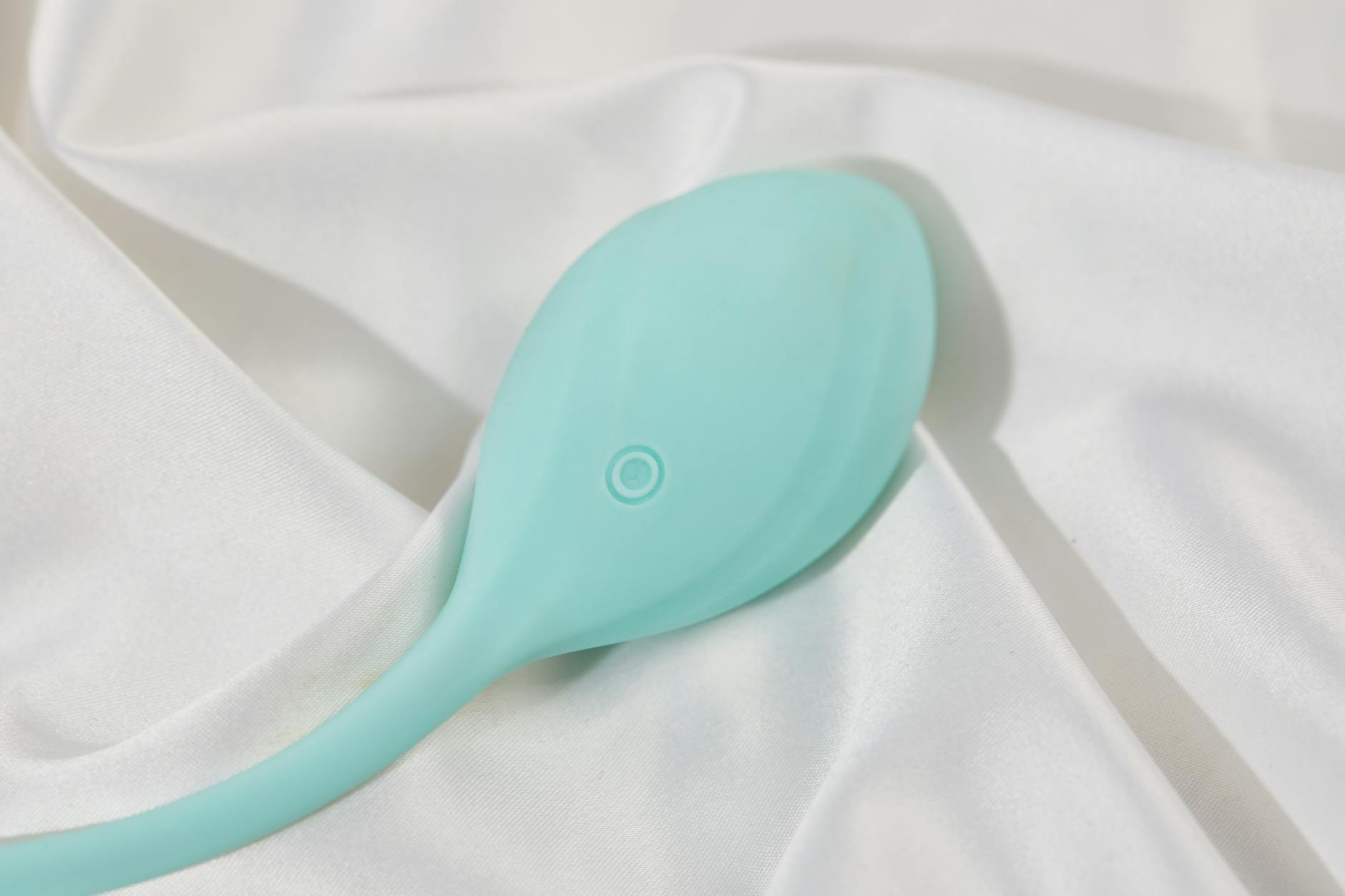
How to Use a Lemon Vibrator With Sensate Focus Exercises for Couples
Sensate focus removes performance pressure and rebuilds touch connection. A lemon clitoral vibrator transforms these exercises from therapeutic to deeply pleasurable.
Let's be real: couples therapy has a reputation for being sterile, clinical, and decidedly unsexy. But sensate focus, one of the most evidence-backed intimacy tools in relationship counseling, doesn't have to feel that way. And when you bring a lemon vibrator into these structured touch exercises, something shifts. The threshold between therapeutic and genuinely pleasurable collapses.
Sensate focus was developed by Masters and Johnson in the 1960s to help couples reconnect when performance anxiety, desire mismatch, or emotional distance had drained the bedroom. The practice removes the expectation of penetration or orgasm entirely. You're rebuilding touch, presence, and attunement. That foundation changes everything.
Here's why pairing sensate focus with a lemon clitoral vibrator works so well, and how to actually do it.
Sensate focus is a structured touching protocol that removes the goal of sex. Both partners take turns. One is the explorer (touches), one is the receiver (experiences). No penetration. No orgasm as the endpoint. No performance.
For the first two phases, you don't even touch genitals. You're touching arms, shoulders, legs, back. You're noticing texture, warmth, response. The receiver gives feedback only if something hurts or feels bad. The explorer goes slowly.
That sounds clinical written out. In practice, it's the opposite. Without the pressure to perform, people relax into sensation in a way they haven't in years.
Phase three introduces genital touch, but still without intercourse as the goal. And this is where a lemon sexual toy enters the picture.
First, a lemon sucker like the Lem creates consistent, targeted sensation that's hard to replicate with fingers alone. Your partner doesn't have to maintain pressure or rhythm. That removes the self-consciousness that creeps back in during phase three.
Second, lemon clitoral vibrators are designed for sensitivity. They use suction rather than percussion, which means the sensation feels less intrusive than a traditional vibrator. For someone who's been numb or disconnected, that suction can feel like waking up the body in a specific, contained way.
Third, handing a tool to your partner shifts the dynamic psychologically. It's an invitation to pleasure, not a performance demand. "I want to try this with you" is very different from "I need you to make this happen." The tool itself becomes the bridge between therapy and play.
Don't skip the first two phases, even though you want to. Touch the non-genital areas first. This is where you rebuild trust in touch itself.
Phase one is entirely non-genital. Fifteen to twenty minutes. One person explores the other's body with hands only. Slow. Curious. No goal. The receiver might close their eyes, or watch. Either is fine.
This is where breath changes. Where you notice your nervous system settling. Where you remember that being touched by someone you love, with no expectation attached, is its own kind of intimacy.
Phase two introduces genital area touch, but not genital stimulation yet. You're touching the outer thighs, the lower belly, the pubic bone, the perineum. Again, slow. Again, no goal. If arousal happens, that's fine. If it doesn't, that's also fine.
Many couples find that by phase two, their bodies have already started to reconnect. The receiver is breathing differently. The explorer is more present than they've been in months.
Now bring the lemon clitoral vibrator into the picture.
Before you start, establish what you're experimenting with. "I'd like to explore with this tool. You can guide me on pressure, pattern, anything that doesn't feel good." Not a proposal. A plan you're executing together.
Start with the Lem on its lowest setting. Don't go straight to the clitoris. Begin on the outer labia, the inner thighs, the perineum. Let the receiver's body adjust to the sensation. A lemon sucker feels different from fingers. Different is not bad. Different is information.
Take three to five minutes here. Then, if the receiver wants, move to the clitoris. Start at the edge, not dead center. The Lem responds to skin-to-skin contact, so you might play with angle and pressure. Pattern one or two. Let the receiver tell you what feels good.
Honestly, don't aim for orgasm. That's the whole point. If it happens, great. If it doesn't, you've still rebuilt sensation and presence and collaboration.
This is the part that separates sensate focus from random foreplay. You talk.
During the exercise, the receiver gives feedback only if something hurts or doesn't work. "Lighter," "a little slower," "pause here." The explorer listens and adjusts. That's it. No performance review. No play-by-play.
After, you sit together. You can talk about what you noticed. How the sensation felt different from fingers. Whether the pressure was right. What you want to explore next time.
For many couples, this is the hardest part. It requires vulnerability. It requires saying "I noticed I was holding my breath" or "I kept waiting for it to turn into sex and couldn't relax." It requires your partner to listen without trying to fix it.
If you're struggling with this conversation, that's real information. It usually means there's emotional distance that sex alone won't bridge.
Do sensate focus with the lemon vibrator once a week, maybe twice. Not daily. Not "whenever we have time." Once a week creates a container. It signals that this is important, structured, intentional.
Start with the non-genital phases for two weeks, maybe three. Let your body remember what touch feels like. Then move to phase three with the Lem.
Stay in phase three for at least four weeks. I know that sounds long. The magic happens in repetition. Your nervous system learns to trust again. Sensation deepens. Arousal becomes possible without forcing it.
Many couples find that by week four or five, the rest of their sex life starts to shift too. Not because sensate focus is magic, but because you've rebuilt the foundation. You've practiced communication. You've proven to each other that pleasure is collaborative, not competitive.
Sometimes even with a lemon clitoral vibrator, the receiver feels numb or disconnected.
First, check the physical stuff. Are you using enough lubricant? Water-based is fine. Dryness makes everything feel muted. Are you starting too intense? The Lem has five patterns. Stay on one or two for the first two weeks.
Second, check the emotional stuff. Is there resentment in the relationship that hasn't been addressed? Unresolved conflict numbs sensation faster than anything. Sensate focus can help rebuild, but it's not a substitute for dealing with anger or betrayal.
Third, consider that numbness might be protective. If the receiver has a history of being touched without consent or against their wishes, the body might need more time. Slower progression. Shorter sessions. More verbal reassurance.
If numbness persists after four weeks of consistent practice, talk to a sex therapist or your doctor. Sometimes numbness is physical. Sometimes it's pointing to something else.
After six to eight weeks of sensate focus with a lemon sexual toy, you might feel ready to introduce other elements. Intercourse. Different toys. Oral sex. Different positions.
The key: you've built the skill of collaborative touch. You've practiced communication. You've remembered that pleasure is something you create together, not something that happens to you.
Many couples find that keeping sensate focus as a monthly ritual, even after moving on to "regular" sex, maintains that foundation. One night a month. The Lem. No goal. Just reconnection.
If you take nothing else from this: sensate focus with a lemon vibrator isn't about reaching a destination. It's about moving together, noticing each other, and remembering that your body and your partner's body are worthy of slow, deliberate attention.
That's the work. That's the intimacy that rebuilds couples.
Absolutely. Sensate focus is maintenance, not just repair. If your connection is good and you want it deeper, sensate focus with a lemon clitoral vibrator is a way to practice vulnerability and presence together. Many couples use it every few months just to check in.
That's common and worth naming. Sensate focus works best when both people choose to show up. If one partner is reluctant, the sessions feel obligatory, and that defeats the purpose. Start with a conversation about why. Is it time? Comfort? Trust? Then address that thing, not the exercise. The exercise can wait.
Most couples notice a shift in presence within two or three sessions. Deeper reconnection takes four to six weeks. Sexual function improvements (like easier arousal or more reliable orgasm) usually take six to eight weeks of consistent practice.
No. Start with hands only for phases one and two. Introduce the Lem in phase three, which is usually week three or four. This lets your body adjust to touch and presence first. The toy enhances what's already building.
That's fine. Pause sensate focus, have sex if you both want to, then return to it next week. Sensate focus isn't about suppressing arousal. It's about creating space where arousal can happen without pressure. If it leads to sex, that's a bonus, not the goal.
Not the traditional way. But you can adapt the principles: video calls where you talk through what you'd be touching, what sensations matter to you, where your body needs attention. It's not the same as in-person touch, but it rebuilds conversation about desire, which is half the work.
Masters, W. H., & Johnson, V. E. (1970). Human Sexual Inadequacy. Little, Brown.
Weiner, L., & Avery-Clark, C. (2017). Sensate focus: Clarifying the Masters and Johnson's approach. Sexual and Relationship Therapy, 32(2), 115-120.
Barrett, D. H., et al. (2020). Intimacy and desire: Awaken the passion in your relationship. Journal of Couple and Relationship Therapy, 19(3), 201-218.