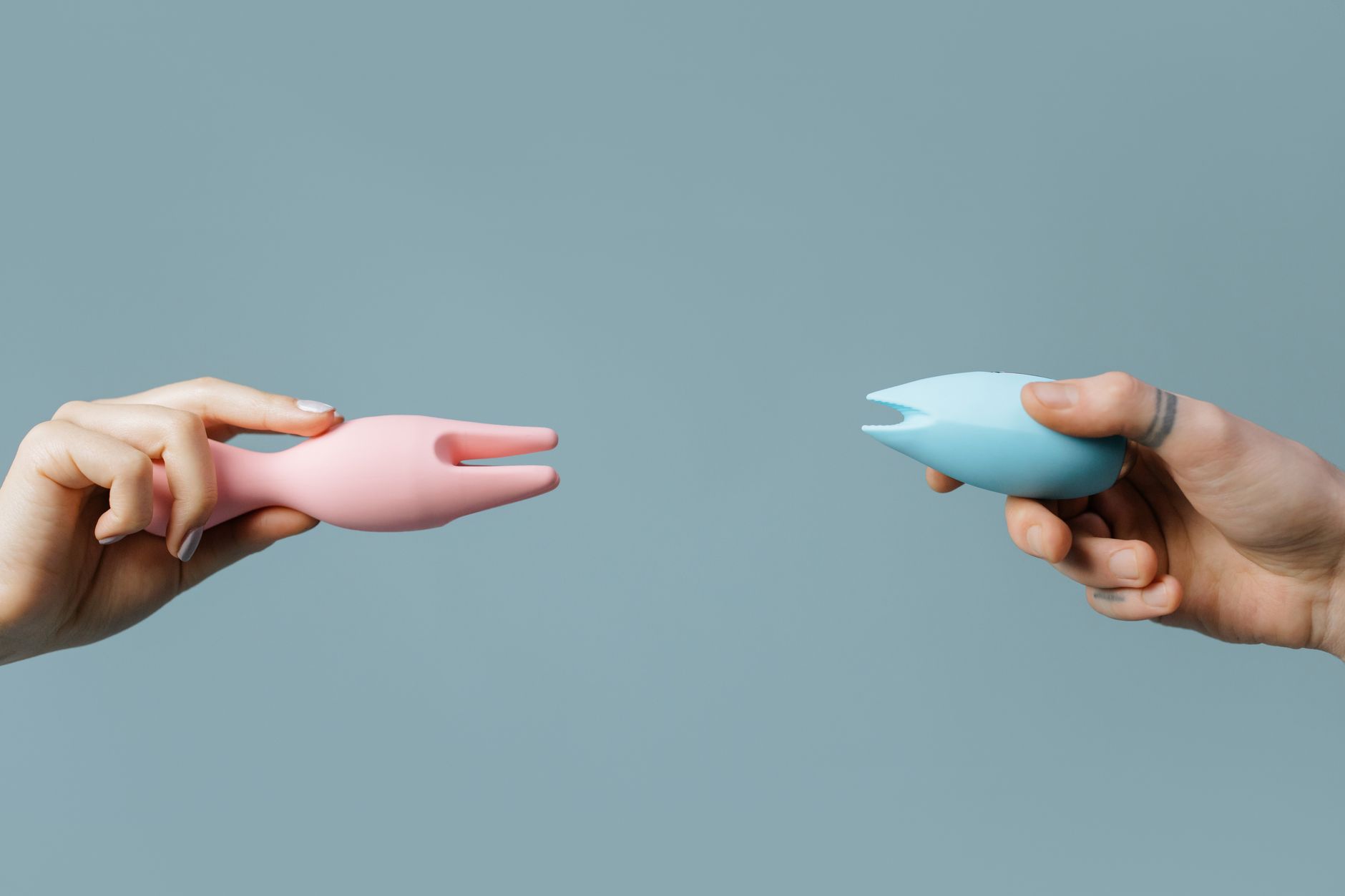
Your body didn't forget how to feel pleasure after birth. But your nervous system is running on fumes, your pelvic floor is in shock, and your hormones have basically exited the chat. Sensation loss after childbirth is not permanent. It's also not rare. Most people I work with report some level of numbness, reduced responsiveness, or complete flatness in the months following delivery.
The pelvic floor muscles stretch dramatically during vaginal delivery (or are cut during caesarean). Either way, the nerves that feed the clitoris and vulva get bruised, compressed, or temporarily damaged. Add in the hormone crash from pregnancy to postpartum, and you're looking at tissue that's thinner, less elastic, and significantly less responsive.
If you're breastfeeding, prolactin is naturally suppressing estrogen to keep milk flowing. This is great for your baby. It's terrible for clitoral sensitivity. The tissue of the clitoris itself becomes more delicate, not more robust. You're not broken. You're post-trauma, post-hormone shift, and post-sleep-deprivation.
Sensation usually returns on its own between 6 and 18 months. But "waiting" is passive. Active reconnection tools, like a lemon vibrator, can speed that process and rebuild neurological pathways much faster than time alone.
Three reasons your clitoris responds better to a lemon clitoral vibrator than it does to manual touch during recovery.
Consistent micro-movements. Your fingers get tired. A lemon vibrator doesn't. It also delivers the same frequency repeatedly, which retrains the nerve pathways to recognize and respond to stimulation. Bruised or compressed nerves need repetition to wake up. A vibrator gives you that without requiring effort or focus.
Suction instead of friction. After birth, direct pressure or rubbing can feel uncomfortable or even painful. Lemon vibrators use suction and micro-pulsing, which stimulate without the mechanical grinding that can irritate healing tissue. You're signaling pleasure to your clitoris without creating additional irritation.
Easier to find the right rhythm. Postpartum, your body's sensitivity map is scrambled. The spot that used to drive you wild might feel numb now. A lemon vibrator's adjustable patterns let you explore slowly, testing different intensities without the performance pressure of partnered touch. You can take 30 minutes to find what actually works. That's allowed.
I worked with a client, Maya, who delivered her first child via emergency caesarean. Six weeks postpartum, she tried partnered sex and felt almost nothing. By week 12, panic set in. She wasn't sure she'd ever feel pleasure again.
We started with a gentle introduction to a lemon vibrator at pattern 1, about 10 minutes a week, no pressure for orgasm. Just presence and curiosity. By week 20, she reported micro-sensations returning. Week 24, actual pleasure. By month 8, full sensation was back.
The timeline varies wildly. Some people recover in 4 months. Others take over a year. But the pattern is consistent: slow reawakening, then rapid return once you hit the threshold.
Here's what accelerates it. You need rest (actual sleep, which postpartum is impossible), lower stress (also impossible), and consistent gentle stimulation (possible with tools). A lemon vibrator gives you the third variable you can actually control.
Wait until you're cleared. Your doctor or midwife should give you the green light. Usually 6 weeks for vaginal delivery, 8 weeks for caesarean. Don't rush this. Your permission is the first act of self-care.
Start stupidly low. A lemon vibrator typically has 5-7 intensity levels. Spend your first three sessions on level 1. Your clitoris doesn't need intensity right now. It needs recognition. Low intensity wakes up the nervous system without overwhelming it.
Solo is better than partnered, initially. You need space to relearn your own body without the cognitive load of responding to a partner. Tell your partner this is about you and your healing, not rejection. Honestly, that conversation matters as much as the tool itself.
15 minutes maximum, twice a week. More is not more. Your nervous system is fragile. Consistent, gentle touch twice a week rebuilds pathways faster than aggressive weekly sessions. You're whispering to your body, not shouting.
Lube, always. Water-based lubrication is essential. Postpartum tissue is delicate. Lubrication reduces friction and allows the suction mechanism of lemon vibrators to work smoothly without discomfort.
If you have a partner, they might feel rejected or confused by your need for solo time with a vibrator. This is a moment to separate two conversations.
One: "My body is recovering from trauma and needs tools to rebuild sensation."
Two: "I want us to rebuild physical intimacy together, but not yet."
These aren't contradictory. The first is about you. The second is about you and your partner as a team. If you mix them, your partner might hear "I don't want you" instead of "I need to heal." That gap costs relationships.
A lot of postpartum couples skip the solo rebuild phase and try partnered sex before sensation has returned. This creates a vicious cycle: sex feels like nothing, both people feel disconnected, the partner feels inadequate, and actual sensation takes longer to return because you're both wound tight. Starting alone with a lemon vibrator isn't sexy. It's strategic.
Once you feel consistent sensation returning, roughly 4-6 months postpartum for most people, partnered exploration becomes useful. But the introduction matters.
Show your partner what you've learned. "This pattern on level 3 feels really good right now." Not "Can you do this?" but "This is what works." Your partner isn't replacing the tool. They're joining a conversation you've already started with your body.
Many couples find that a lemon vibrator becomes part of partnered sex permanently, which is great. Some couples use it as a bridge tool for a few months and move on. Both are fine. The point is your pleasure, not the tool's job description.
The first time sensation returns, even a little, is often emotional. Relief, grief, anger, gratitude. All valid. You've been living in a numb body. Feeling again is a major event.
Some people feel frustrated that recovery takes "so long." Eight months feels like forever when you're sleep-deprived and touched-out. Give yourself grace. Your body built and delivered a human. It earned the recovery time.
Others feel guilt using a tool instead of relying on their partner. Let that go. A lemon vibrator isn't betrayal. It's smart self-care. Your partner benefits when you're reconnected to your own pleasure.
Your OB or midwife needs to clear you first, usually 6-8 weeks postpartum. After that clearance, you're safe to start. Begin at low intensity and go slow. Your tissue is still healing even if bleeding has stopped.
Yes, research on vibration therapy for nerve recovery shows that consistent, gentle stimulation retrains neural pathways faster than passive waiting. It won't magically speed healing, but it removes the waiting from the equation. You're actively contributing to your own recovery instead of hoping sensation returns on its own.
Completely normal. Your clitoris is in shock. You might feel mild tingling or buzzing without actual pleasure. That's the nervous system waking up. It takes sessions for the "pleasure" part to arrive. Patience is the skill here, not intensity.
Yes. Vibration is external stimulation. It won't affect milk supply or hormone levels beyond what postpartum already does. However, prolactin suppression of estrogen means your tissue recovery might be slower. Low intensity and patience matter even more.
I recommend being honest. "I'm working on rebuilding sensation with this tool. It's about my healing, not about us." Transparency prevents resentment and shame, which are the actual threats to postpartum intimacy. When partners understand the why, they usually become allies instead of feeling rejected.
Varies. Some people report significant improvement by 4-5 months. Full recovery is usually 12-18 months postpartum. But full recovery and daily pleasure-seeking are different goals. You can feel pleasure again well before sensation returns 100 percent.
Postpartum is not about bouncing back. Your body didn't fail you. It did exactly what it was designed to do: house and deliver a baby. Now it needs rest, support, and gentle reconnection.
A lemon clitoral vibrator is a tool for that reconnection. It's not the whole story. Sleep, stress reduction, partner support, and permission matter more. But in the moments when you have space to be with yourself, a gentle vibrator is a way of saying to your body: "I see you. I'm here. We're going to feel good again."
Your pleasure isn't selfish. It's resilience. And you deserve to rebuild it at your own pace.
If you're struggling with postpartum sensation loss and partnered intimacy isn't returning after 18 months, or if pain persists, talk to your OB. There are treatment options you might not know about. Recovery isn't infinite. It's supported by people who know what they're looking at.