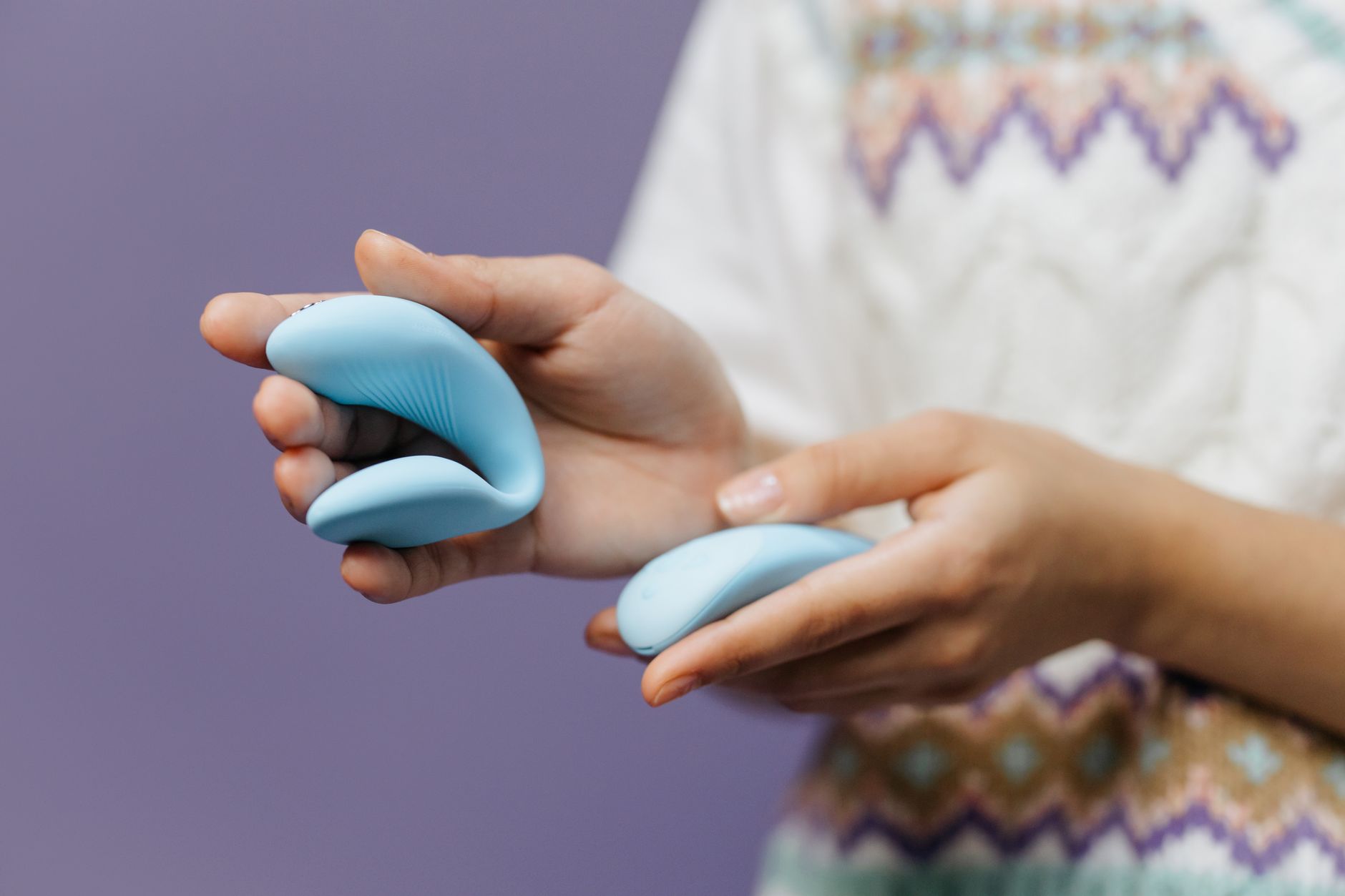
How to Use a Lemon Vibrator When Orgasms Feel Routine After Years Together
Long-term relationships change how your body responds to pleasure. Here's what's actually happening, why a lemon vibrator resets the pattern, and how to make orgasms feel urgent again.
After years together, your orgasms feel predictable. Not bad. Just. Known. Like your body has learned the script so well that it's running on autopilot. Your partner knows exactly what works. You know exactly what works. The problem is that knowing everything removes the friction that made it exciting in the first place.
When you're new to a partner, every touch carries novelty. Your brain doesn't know what comes next. That uncertainty floods your system with dopamine and norepinephrine. Your nervous system is genuinely surprised. Over years, that novelty fades. Your brain learns the pattern. Anticipation flattens into expectation.
This is called habituation, and it's not weakness or incompatibility. It's how brains work. Repetition dulls novelty. The same stimulus, delivered the same way, generates less activation in your pleasure centers.
Here's the thing that nobody mentions: this is actually fixable. And a lemon vibrator, used intentionally, can be the reset button.
A lemon clitoral vibrator introduces three elements that routine sex has lost.
First: physical novelty. The sensation is genuinely different from fingers or a partner's body. It's not better or worse, just different. Your nerve endings are meeting a texture and rhythm they haven't learned yet. That's dopamine.
Second: mental permission. Using a device means you're not performing for your partner in the same way. You're experimenting. You're allowed to be a little selfish about it. That shift in headspace is enormous. Many clients report that the first orgasm with a new tool feels more intense simply because they gave themselves permission to focus entirely on themselves.
Third: pattern interruption. You've probably had sex at the same time of day, in the same position, with the same rhythm. A lemon vibrator changes the variables. Maybe you use it solo first. Maybe you incorporate it during foreplay. Maybe you use it to explore new sensations with your partner watching. The script breaks open. Your brain has to pay attention again.
Here's where most couples stumble. The partner hears "I want to use a vibrator" as "you're not enough." That's almost never what's being communicated, but the vulnerability gap is real.
The conversation that works: frame it as an experiment you want to do together, not something you need because something is missing. "I want to try something new that might feel good" lands differently than "I'm not satisfied."
Consider using the lemon vibrator during partnered sex first, not solo. Let them hold it. Let them control the intensity. This is collaborative novelty, not a solo project. Many couples find that this reintroduces an element of play and discovery that got lost in routine.
If your partner seems hesitant, ask what the concern actually is. Usually it's not the device itself. It's anxiety about performance or feeling replaced. A direct conversation about that is faster than dancing around it.
One of the most effective patterns I recommend for long-term couples is the sensate focus approach, adapted for a lemon vibrator.
Start with low intensity. Pattern 1. Let your partner trace it around your entire vulva, not rushing toward orgasm. The goal is not climax. The goal is rediscovering what feels good. This takes pressure off performance and puts it back on exploration.
Many people in long-term relationships have forgotten that pleasure exists outside of orgasm. We've optimized for the finish line. A lemon vibrator, used slowly and deliberately, retrains you to notice subtlety again. That sustained attention is what makes orgasm feel new when it finally arrives.
Try this: 10 minutes of exploration at low settings. No goal. Just sensation. Notice what makes you gasp. Notice what makes you want more. Tell your partner what you notice. Then, if you want to, increase intensity. But the point has already happened. You've remembered that pleasure is a landscape, not a destination.
After years together, you might be using a lemon vibrator the same way you've had sex. Fast progression toward orgasm. That defeats the purpose.
Instead, slow down. Start at the lowest pattern. Sit with it. Let your nervous system adjust. Many people report that when they give themselves 15 to 20 minutes of buildup with a clitoral vibrator, the orgasm lands completely differently. Not just stronger. More complex. Full-body.
The speed of habituation increases with speed. If you're always rushing toward climax, your brain habituates faster. If you vary the pace, vary the intensity, vary the approach, you're continuously introducing novelty. Your nervous system stays engaged.
Some couples benefit from a different path. You use the lemon vibrator solo for a few weeks. You figure out what actually feels good to you. You rediscover your own pleasure independent of your partner's presence or preference.
Then you bring that knowledge back to partnered sex. "Here's what I learned about my body. Here's what I want to try together."
This approach solves a different problem. In long-term relationships, we often lose touch with our own pleasure. We've learned what our partner enjoys touching. We've learned what our partner finds attractive. We've learned what our partner prefers. Somewhere in that accommodation, we've let the focus shift away from what our own body actually wants.
Using a lemon clitoral vibrator solo recenters that. It's radical self-focus. And when you come back to partnered sex with that clarity, everything is different.
Here's a reality that doesn't get discussed enough: sometimes "orgasms feel boring" is actually "we're not having sex as often as I want." Or the reverse. Or you want it at different times.
A lemon vibrator can paper over that problem temporarily, but it shouldn't replace the actual conversation. If desire mismatch is real, that's a different issue that might benefit from couples therapy or explicit renegotiation of expectations.
But if the sex is happening and it just feels flat, that's where a vibrator genuinely helps. It's not a Band-Aid on a broken relationship. It's a tool for reintroducing novelty into something that's real and committed but has lost some urgency.
If orgasms have disappeared entirely, that's different from routine. If your interest in sex with your partner has completely evaporated, a lemon vibrator isn't the answer. That usually means something else is happening. Resentment. Disconnection. Medical factors. Those deserve direct attention, possibly with a therapist who specializes in couples sexuality.
But if the sex is good and you're together and it just feels predictable? That's incredibly common. That's where novelty and intention actually work.
Don't expect magic on the first try. Your nervous system is wired for the routine. A lemon vibrator disrupts that, but rewiring takes time.
The first few times might feel awkward. You might feel self-conscious. That's normal. By week three or four, as you're varying your approach and exploring different intensities and patterns, something shifts. Your brain stops running on autopilot. Orgasms start feeling less like a known outcome and more like a genuine experience.
Many couples also report that the novelty of the experience creates emotional closeness, which then feeds back into the pleasure. You're curious about each other again. You're paying attention. That attention alone changes everything.
Long-term relationships don't need to feel stale. They need novelty and intention. A lemon vibrator, used thoughtfully, delivers both.
Not if you frame it right. The conversation matters. "I want to explore something new together" is collaborative. "You're not enough" is the message to avoid. Most partners actually enjoy the novelty too, especially if they're invited into the exploration rather than excluded from it. If your partner has deeper insecurity, that's worth addressing directly, possibly with a therapist, rather than avoiding the vibrator to manage their feelings.
There's no magic frequency. Some couples use it twice a week for a month, then dial back. Some integrate it permanently into their routine. The goal is novelty and attention, not dependency. If you're using it every single time in the exact same way, you're habituation again. Vary your approach. Use it sometimes. Skip it sometimes. Use different patterns. Let your brain stay surprised.
Both. The physical sensation is real. A suction-style clitoral vibrator stimulates nerves differently than fingers, and that can produce genuine physiological changes. But the mental component is equally powerful. Permission, novelty, focused attention. These are neurological, not fake. The best orgasm is the one where your brain is fully engaged. A new tool facilitates that engagement.
Context matters. Were you stressed? Were you trying too hard? Was there pressure to perform? Did you use it the same way every time? Many couples try a vibrator once or twice and abandon it if it doesn't immediately fix things. But habituation is slow. Give yourself at least a month of varied, intentional exploration before deciding it's not working. Also, different tools work for different people. A lemon vibrator has a specific sensation. If it's not right, that's fine. But don't assume all devices will feel the same.
Completely normal. Habituation is universal. It's not about dysfunction or lack of love. It's about how brains work. Long-term relationships are incredible, but they require intentional novelty to stay sexually alive. Some couples do this through travel or new settings. Some through communication about fantasy. Some through toys. All are valid. You're not broken if you need something to shake up the routine.
That's fine. Solo exploration is valid. You might learn things about yourself that you later bring back to partnered sex. The only concern is if using a lemon vibrator alone creates distance in your relationship, or if it's becoming a substitute for partnered intimacy when both people want more connection. If that's happening, that's the actual issue to address. But exploring your own pleasure is healthy, full stop.
Routine is not the same as dead. It just means your nervous system has adapted. That adaptation is reversible. A lemon vibrator, paired with intention and communication, can absolutely reintroduce the urgency and attention that made early sex feel electric. It's not cheating. It's not a sign of failure. It's just acknowledging that long-term pleasure requires ongoing novelty and that sometimes a new tool is exactly what you need to remember why you wanted this person in the first place.