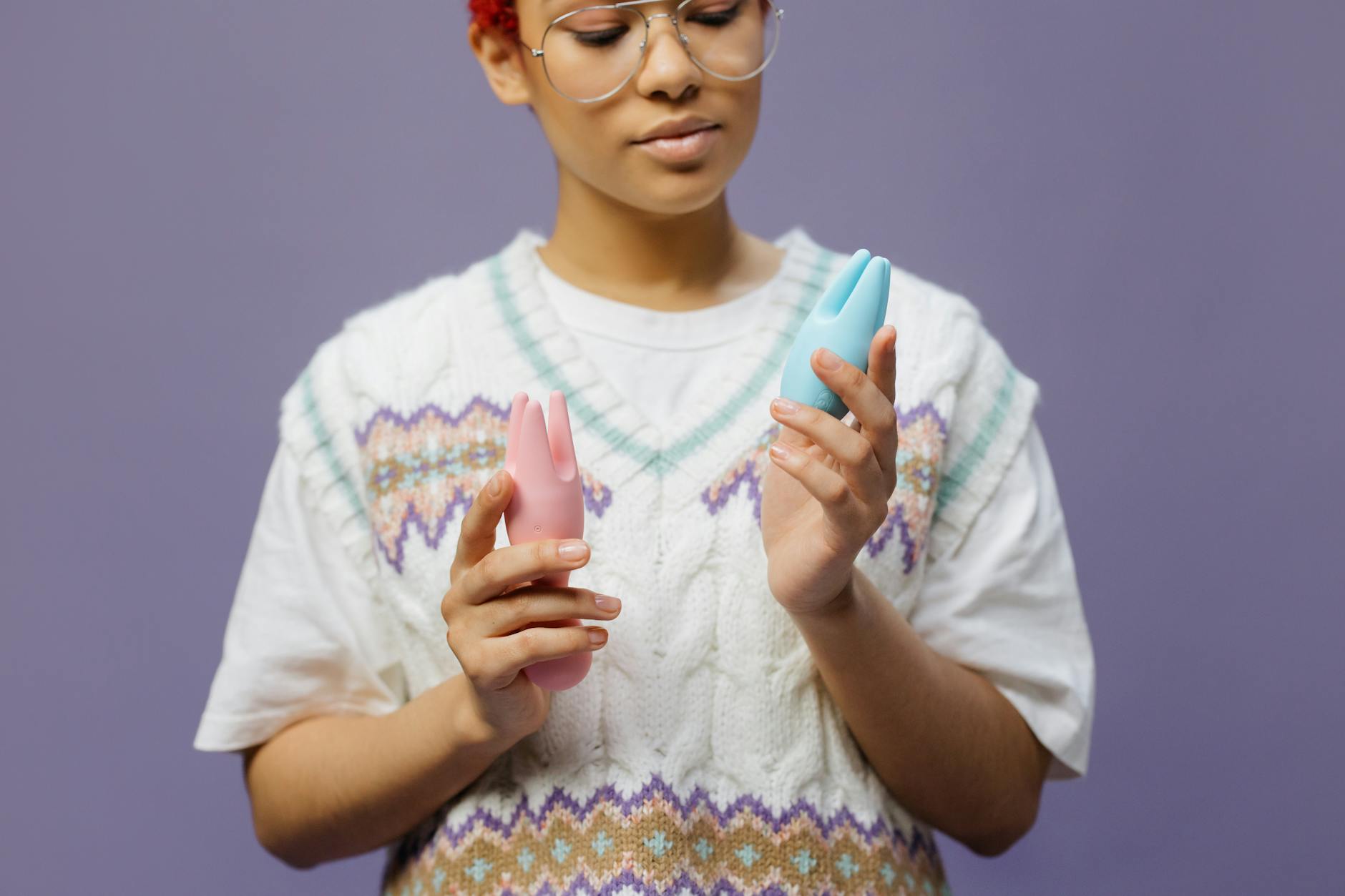
Your body isn't broken. It's changing the timeline. If you've been relying on a fifteen-minute warm-up and sudden climax, perimenopause might hand you a thirty-minute slow build followed by an orgasm that feels less like lightning and more like a wave rolling in. That's not a loss. It's just different. And tools like lemon clitoral vibrators meet that difference halfway.
Perimenopause is the ten-year stretch before menopause actually arrives. Hormones fluctuate wildly. Some days you feel like your old self. Other days, arousal takes a left turn into unfamiliar territory. Your brain still wants pleasure. Your body is just asking for new logistics.
Estrogen and progesterone don't drop smoothly. They swing like a pendulum. One week you're wildly into sex. Three days later, the thought of touching your clitoris feels meh. This isn't psychological. It's biochemical.
Here's the specific stuff that happens. Vaginal blood flow decreases, which means arousal takes longer to register physically. Your clitoris needs more stimulation to wake up. The pelvic floor tightens (especially when progesterone drops), which can delay or blunt orgasms. And your brain is juggling hot flashes, sleep deprivation, and mood shifts, so mental arousal is competing for attention with cortisol.
That said, here's the part that gets lost in the noise: your capacity for pleasure is still there. The nerves haven't disappeared. The brain's pleasure centers haven't shut down. You're just working with a different operating system.
Unlike fingers or traditional vibrators, lemon sexual toys use air-suction technology. That matters for perimenopause bodies. Here's why.
Suction works with decreased sensitivity. Instead of requiring direct friction on tissue that's becoming thinner and more reactive to pressure, the lemon clitoral vibrator creates a gentle seal and builds pressure gradually. You get stimulation without the harsh contact that can feel intense or even uncomfortable.
The intensity ramps slowly. Starting at pattern one on a Lem vibrator gives you that long warm-up perimenopause bodies now need. You're not waiting for your clitoris to respond. You're actively inviting it. By the time you reach patterns three or four, your body has caught up and arousal is building naturally.
You're also in control of the pace. Perimenopause doesn't like surprises. If your partner usually moves quickly and your body now moves slowly, a lemon sucker lets you set your own rhythm without negotiating or explaining every minute.
Forget the five-minute sprint. Budget twenty to thirty minutes, and structure it like this.
First five minutes: low-key foreplay, kissing, touching somewhere other than your genitals. You're signaling to your nervous system that sex is happening. This matters more now because arousal needs actual time to travel from your brain to your body.
Next ten to fifteen minutes: start with the Lem on its lowest pattern, or even just holding it without turning it on yet. Let your clitoris adjust to the sensation. This is not laziness. This is working with your body's new pace. Many people in perimenopause find that this slow introduction prevents overstimulation and actually leads to stronger orgasms later.
Then five to ten minutes: increase the intensity gradually. Move through patterns two and three. Your arousal should be building now. Notice what pattern feels good today. (It might be different tomorrow. Perimenopause is like that.)
Orgasm usually follows from here, but here's what's true now: if it doesn't, that's fine. Not every session needs to end in climax. Some of my clients report that the best part of using a lemon vibrator during perimenopause is the pleasure itself, orgasm or not.
Some days during your cycle, your clitoris feels almost numb. Other days it's oversensitive. Lemon vibrators navigate both.
On low-sensitivity days, the suction pattern actually helps. It's gentler than direct vibration but gives you enough stimulation to register. You're not white-knuckling your way to an orgasm. You're letting the device do the work.
On high-sensitivity days, start lower and stay lower. Most lemon adult toys like the Lem have multiple intensity levels exactly because perimenopause bodies need options. Pattern one is genuinely enough. You don't need to prove anything by jumping to maximum.
This flexibility is huge. Traditional vibrators are one speed or maybe three. A lemon sucker gives you a range that actually tracks your hormonal reality.
If you're using a lemon vibrator solo, skip this section. But if your partner is in the picture, here's what helps.
Tell them the timeline has changed. Not as an apology. As information. "I need about twenty minutes to get fully aroused now" is useful data. It shifts the conversation from "something's wrong" to "here's what works."
Let them watch or participate. Some partners worry that a vibrator means they're not enough. Showing them how you use it, letting them hold it, or taking turns can reframe the tool as something that brings you closer, not something that replaces them.
Prioritize your pleasure first. If you need to warm up solo before partnered sex, that's not selfish. That's logistics. Some couples find that a solo session with a lemon vibrator beforehand actually makes partnered sex feel better because you're already aroused and can focus on connection instead of chasing sensation.
And honestly. If orgasm is taking longer or feels different now, a lemon clitoral vibrator isn't cheating. It's adapting.
Perimenopause is messy because you don't know what day you'll wake up to. But you can track patterns.
Many people find that arousal is easier in the first half of their cycle (roughly days one to fourteen). During that window, estrogen is higher and sensitivity returns closer to baseline. If you're still menstruating, use that information. Schedule partnered sex or solo exploration during your stronger weeks.
Around ovulation, some people experience a arousal spike. Take advantage. It's real and it's temporary.
The luteal phase (after ovulation) can be trickier. Progesterone rises and libido often dips. This is when lemon vibrators shine because you're fighting less resistance. You don't need maximum stimulation. You just need the right kind.
Tracking doesn't require an app if you hate them. Just notice. "Sex felt great on day seven but meh on day twenty-two." That's all you need.
If orgasms disappear entirely for months, mention it. Severe pain during arousal or penetration belongs in a conversation with a gynecologist. Genitourinary syndrome of menopause (which can start in perimenopause) is treatable. Topical estrogen is often the answer.
If hot flashes or mood shifts are so intense that sex feels impossible, hormone therapy might help. That's a separate conversation, but it's worth having. Perimenopause isn't just a sex problem. It's a whole-body transition. Treating it holistically sometimes means medical support.
But in most cases, perimenopause and pleasure coexist just fine. You just need tools that work with your body's new rhythm.
Absolutely. Perimenopause can start in your late thirties or early forties, sometimes even earlier. If your cycles are getting closer together, further apart, heavier, or lighter, you might be in perimenopause already. A lemon clitoral vibrator works beautifully during this phase because your hormones are fluctuating. You don't have to wait for menopause to arrive.
This is a bigger conversation than a vibrator can solve, but the vibrator can help you show them what works. If your partner is frustrated that arousal now takes longer, using a Lem together sometimes reframes it as a fun exploration rather than a problem to fix. But if the frustration is really about them, that's relationship work, not a toy problem. You might find the guide on how to use a lemon vibrator when your partner expects quick orgasms helpful.
That's common. Fluctuating estrogen can make your clitoris feel less responsive. A lemon sucker's suction pattern often reawakens sensation better than vibration alone because it works with the tissue structure itself, not just buzzing against it. If numbness is severe or painful, check with a healthcare provider. But for typical hormonal dips, lemon vibrators are genuinely a game-changer.
Completely normal. Perimenopause orgasms often feel less explosive and more spreading or rolling. Some people love this. Others grieve the old intensity. Both reactions are valid. A lemon clitoral vibrator can help you find pleasure in the new sensation rather than chasing the old one. Think of it as discovering a different kind of good.
Yes, if you want to. Some people find daily or near-daily use helps them stay connected to their pleasure during a season of big changes. Others prefer a few times a week. There's no rule. Your body will tell you what feels right. Just make sure you're cleaning your toy properly between uses. Silicone toys like the Lem are easy to wash with soap and warm water.
No. If anything, it often teaches you what your body needs now. Over time, many people find they can access pleasure more easily without the vibrator because they've learned their new rhythm. The Lem is a tool for understanding your body, not a crutch. Use it as much as you want without guilt.
Perimenopause is not your sexual decline. It's your sexual middle chapter, and it can be richer than what came before if you stop fighting the new pace and start working with it.
A lemon vibrator meets you exactly where you are. It doesn't demand that you speed up. It doesn't require a partner. It doesn't ask you to ignore your hormones. It just says: here's a way to feel good that works with your body right now.
If you're curious about exploring this season of pleasure more intentionally, our team at Hello Nancy is here. Reach out to contact us with questions about which lemon sexual toys might fit your needs, or browse the full collection to see what resonates.