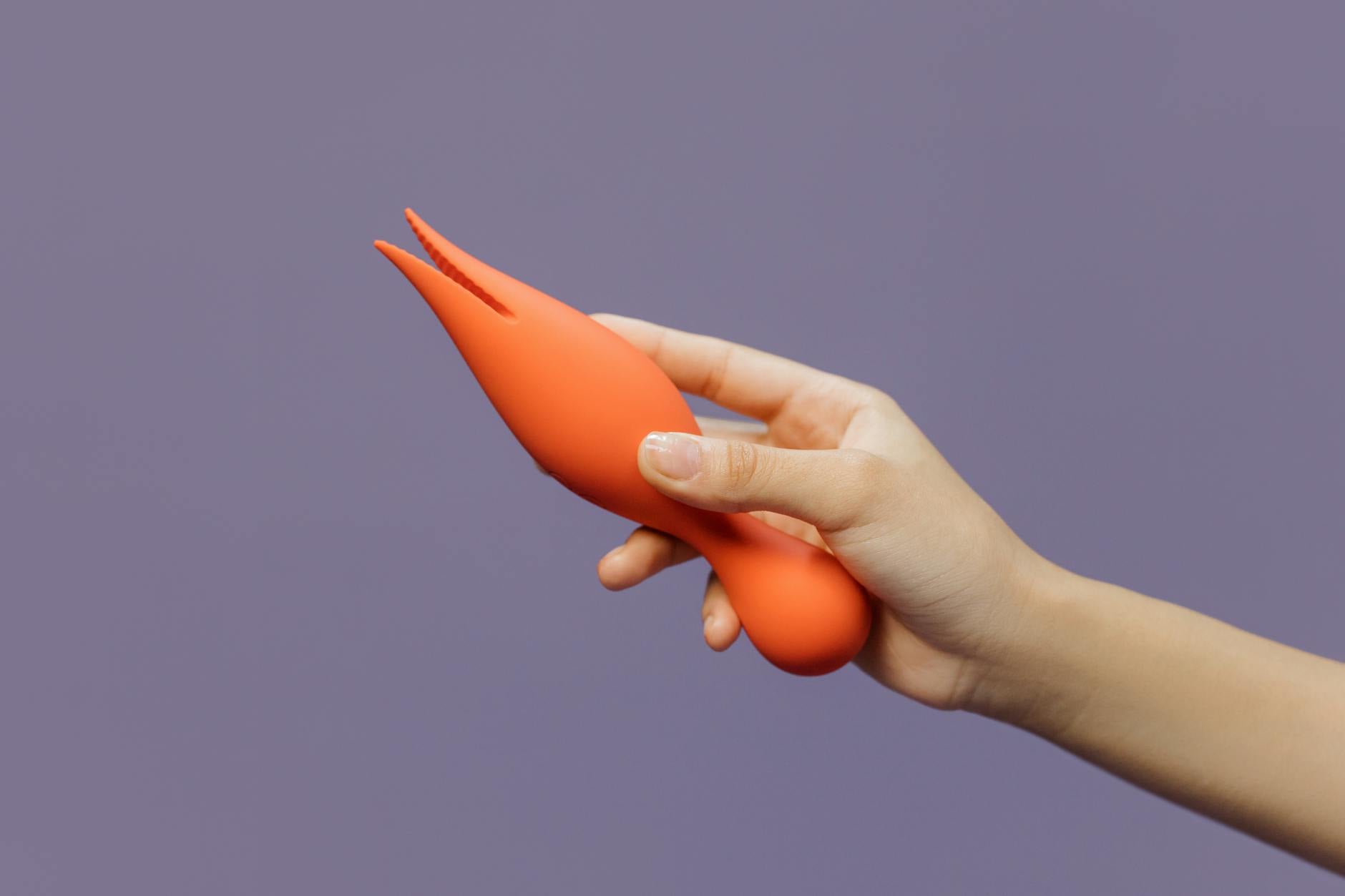
Let's be real. Anxiety doesn't just live in your head. When stress gets chronic, it colonizes your whole system, including your ability to feel pleasure. Your nervous system gets stuck in fight-or-flight mode, blood doesn't flow where it needs to, and orgasm becomes this distant theoretical concept instead of an actual physical experience.
You're not broken. Your nervous system is protecting you from perceived threat. And the path back to pleasure isn't about forcing yourself to "relax" or taking another bubble bath. It's about methodically rewiring sensation back into your body, starting from zero.
A lemon clitoral vibrator can be that reset button. Not because it's magic, but because it works with your nervous system's own recovery timeline instead of against it.
When you're in chronic stress, your cortisol stays elevated. This triggers a cascade of physical changes: your pelvic floor muscles tense (sometimes painfully), blood vessels constrict, and your brain's arousal circuitry gets deprioritized. The body's message is simple: survival first, pleasure later.
Add to that the cognitive load. Anxiety is a noise machine. You can't turn it off, so your attention can't settle anywhere long enough to build arousal. You might start something with a partner or alone, feel the ghost of desire, then get pulled back into whatever you were worrying about.
Most people respond by trying harder. They add pressure. They schedule sex. They expect themselves to perform like they did before the anxiety hit. This creates a second layer of stress on top of the first, which makes everything worse.
The actual path back requires you to drop the expectation of orgasm entirely and start with sensation. Full stop.
A lemon suction vibrator is different from traditional vibrators because it doesn't require the same mental load. With a wand or bullet, you're managing intensity, angle, speed. You're thinking. A lemon clitoral vibrator uses gentle suction and pulsing, which means your body can do the work while your nervous system relaxes.
The suction sensation also tends to feel less intense than direct vibration, which is exactly what you need when you're in recovery. You're not starting with a jackhammer. You're starting with a whisper.
Second, suction triggers something different neurologically than vibration. It activates the vagus nerve differently, which is the highway between your nervous system and your pleasure centers. For people in anxiety recovery, this gentler pathway often feels more accessible than traditional vibration.
Here's the key framework: your first goal is not an orgasm. It's feeling something. Anything.
Pick a time when you're least anxious (morning, maybe, or early evening). Lie down somewhere you feel genuinely safe. Don't have an endgame. Set a timer for 10 minutes.
Start on the lowest setting. Let it sit against your clitoris without moving it around. You're not trying to achieve anything. You're just introducing your nervous system to a new input signal.
You might feel nothing the first few times. That's completely normal and honestly common. Your nervous system has learned to defend against pleasure signals. This is you retraining it.
Don't add pressure. Don't think "this should feel better by now." Just observe. Notice temperature, pressure, rhythm. Notice if your breath changes. Notice if you tense up (you probably will). That's data, not failure.
Once you're comfortable with the lowest setting for a few sessions, try pattern 2. Stay there for a few sessions. Then 3. You're not racing toward intensity. You're building a foundation of safety.
At some point, maybe week 2 or week 4, you might feel actual pleasure. A pulse of warmth. An involuntary muscle twitch. This is your nervous system saying "okay, I remember how to do this."
Don't grab for an orgasm at this point either. Just let the pleasure exist. The orgasm is not the point. The pleasure is the point. Your nervous system needs to trust that pleasure signals are safe and won't be yanked away.
Once you're three or four sessions in, start noticing your breathing. Most anxious people breathe shallowly when they're stressed and keep doing it during self-pleasure. Your nervous system can't fully relax on shallow breath.
Try this: slow exhale breathing. Four counts in, six counts out. The longer exhale tells your nervous system you're safe. It's almost impossible to be in sympathetic (fight-or-flight) activation on a long, slow exhale.
Pair this with the lemon vibrator and you're doing double work. Your vagal nerve is getting calmed by the breath while your clitoris is getting rewired to pleasure sensation.
If you have a partner, they might want to help. This is tricky. Let them hold the vibrator, but be crystal clear about communication. You need to direct them: "pause here," "try the next pattern," "give me a minute."
Most partners are actually relieved to have a role that's not about their performance. They're holding a tool, following your guidance. There's no pressure to "make you finish." You're just rebuilding sensation together.
The emotional intimacy of this rebuilding process, if you do it with a partner, is profound. You're showing someone your nervous system in recovery mode. That's trust.
You'll have sessions where anxiety interrupts. You're feeling good, then suddenly you remember something stressful and the arousal collapses. This happens to almost everyone recovering from chronic stress.
Don't push through. Don't get frustrated. Your nervous system is telling you something. Stop, breathe, sit with the feeling for 30 seconds. You're not broken. You're learning.
You might try again later that day or the next day. You might try a different time of day. You might realize that your anxiety actually peaks at a specific hour and plan your sessions around that.
This isn't romance. It's mechanics. And understanding the mechanics of your own nervous system is how you actually heal it.
Some people feel difference in two weeks. Others take three months. Anxiety doesn't have a single recovery curve. Your timeline depends on how long you've been in chronic stress, whether you're addressing the source of the stress, whether you're sleeping, what else is happening in your life.
Don't measure progress by orgasms. Measure it by whether sensation is returning. By whether you think about pleasure less as a failure and more as a normal part of your week. By whether your pelvic floor is starting to relax even outside of these sessions.
If three months of consistent practice brings zero shift, or if you experience pain, talk to a therapist trained in both anxiety and sexual health. A good sex therapist or trauma-informed therapist can help identify blocks that a lemon clitoral vibrator alone can't address.
If your anxiety is unmanaged (not in treatment, no coping strategies), the vibrator is a tool but not the foundation. You need to address the nervous system as a whole. Talk to your doctor. Consider anxiety-focused therapy. Get actual sleep.
The vibrator is the bridge back to pleasure. It's not the whole journey.
Start with 10 minutes, no timer stress. Once you're comfortable, you can go longer if it feels good, but 10 to 20 minutes is plenty. The goal is consistency, not duration. Three sessions a week beats one 45-minute marathon session. Your nervous system learns through repetition, not intensity.
Yes, absolutely. In fact, many SSRIs and anti-anxiety meds can suppress libido, so your recovery timeline might be longer. That's okay. The vibrator still works. Your nervous system is still relearning pleasure. The medication is helping your baseline anxiety, which gives the pleasure work more space to happen. Talk to your doctor if you're concerned about sexual side effects from medication.
Then rebuilding pleasure with that partner present probably isn't the right move. Your nervous system needs to trust that pleasure is safe before you add relational complexity into it. Consider solo practice first. If the relationship itself is causing the anxiety, that's a separate conversation. You might find a couples therapist more useful than a vibrator.
Partially. The vibrator retrains your nervous system's capacity for pleasure, which is genuinely valuable. But if the stressor is still active (overwhelming job, unstable housing, unmanaged health issue), you're trying to rebuild pleasure while standing in the fire. You need to address the root stressor too. The vibrator helps, but it's not the only answer.
Anxiety about pleasure shows up as tension, intrusive thoughts, physical shutdown during arousal. You think something bad is going to happen, or you feel physically tightened. Low libido is more neutral: you just don't think about sex much. If you're experiencing tension and dread alongside the lack of desire, that's anxiety. If you're just neutral and uninterested, that might be low libido (which has different solutions).
That's exactly the right question to ask. If the idea of self-pleasure triggers significant anxiety, start without the vibrator. Just practice the breathing and sensation awareness. Lie down, focus on breath, notice what your body feels like. Once that's comfortable, introduce the vibrator. You control the timeline. Your nervous system's safety is the real goal, not the vibrator itself.
Your pleasure isn't gone. It's just offline temporarily while your nervous system is in protection mode. A lemon clitoral vibrator gives you a methodical way to turn it back on, session by session, without forcing anything.
The real work isn't in the vibrator. It's in showing up consistently, respecting your own timeline, and trusting that your body wants to feel good again. It does.