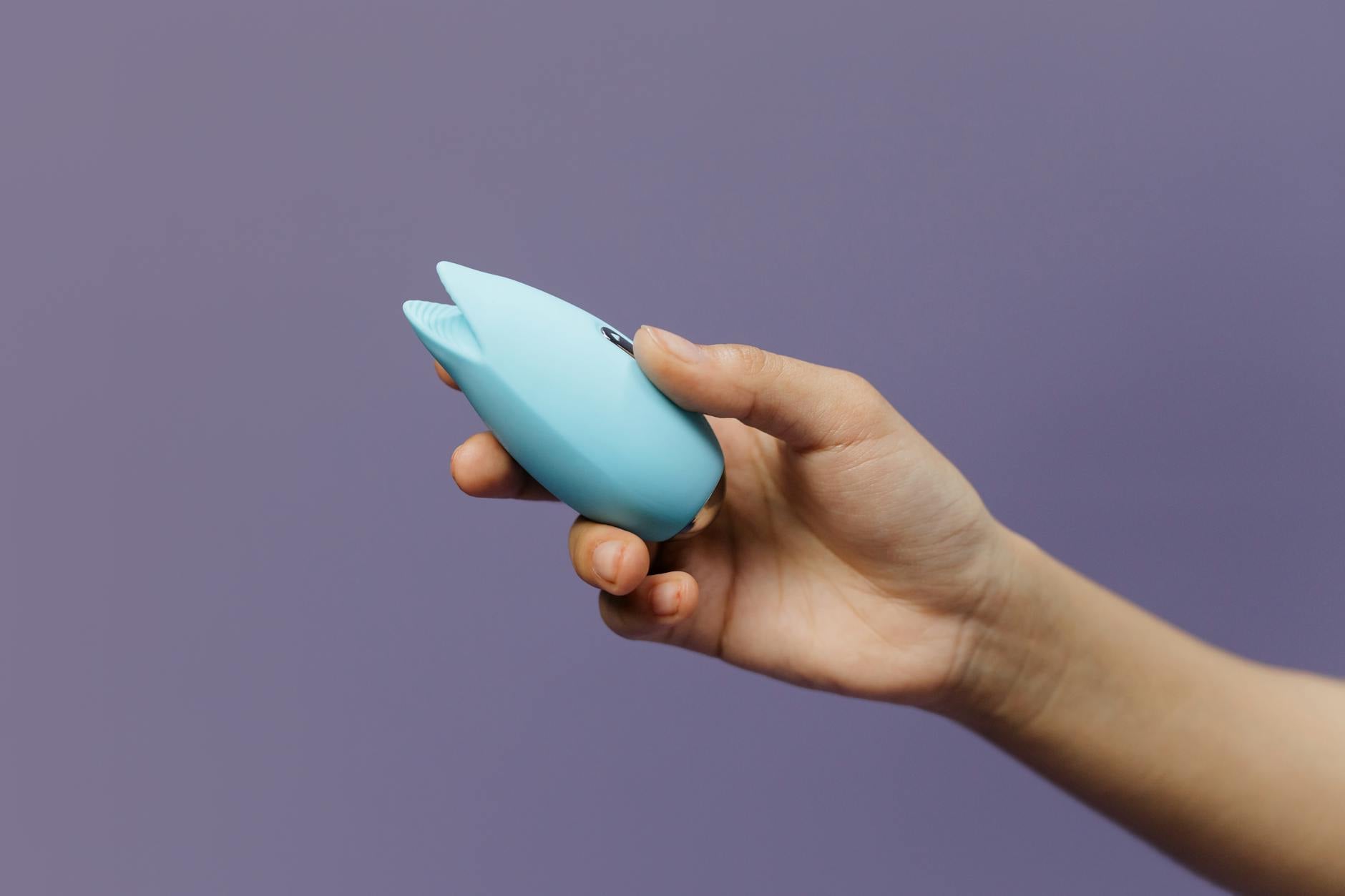
Let's be honest. One partner wants sex twice a week. The other wants it once a month. One initiates. The other dodges. And suddenly what should be a simple physical incompatibility becomes a minefield of resentment, rejection, and shame.
I see this in my practice constantly. It's one of the most common friction points in otherwise healthy relationships. And here's what most couples get wrong: they treat it as a problem to solve rather than a dynamic to manage. That's where lemon vibrators and other adult toys come in.
First, the reassurance you probably need: mismatched libidos don't mean your partner doesn't find you attractive. Desire is influenced by stress, hormones, medication, sleep, work pressure, how seen you feel in the relationship, and a hundred other factors that have nothing to do with you.
I worked with a couple last year where the lower-libido partner was on an antidepressant. The medication was working brilliantly for her anxiety, but it flattened sexual desire as a side effect. Her partner interpreted her lower interest as rejection. She felt guilty for not wanting more. Neither of them knew the medication was the culprit until we dug deeper.
Desire mismatch also shows up around life stages. New parents often experience this. The partner with young kids at home is touched out from caregiving and feels zero desire for more physical contact. The other partner is craving connection. Both are completely reasonable. Neither is wrong.
Here's the practical part. When your partner has higher desire than you do, using a lemon clitoral vibrator (or another pleasure tool) with them creates several benefits that straight partnered sex doesn't always offer:
It takes pressure off you to perform. You're not working to reach an orgasm on someone else's timeline. You're in control of your own pleasure, which means you can engage without the mental load of "am I taking too long, is this working, should I be feeling more."
It lets you be present without duty-driven sex. When you use a lemon vibrator together, you're creating novelty and shared exploration instead of repeating the same script. That novelty alone can wake up desire that's been dormant.
It gives you agency. Instead of saying no to sex and creating rejection, you're saying yes to something different. "I'm not feeling penetrative sex tonight, but I want to feel good with you. Let's use the Lem together." That's a complete reframe.
It requires conversation. Using a lemon sexual toy forces you out of autopilot and into actual communication about what you want, what feels good, what you're curious about. That conversation is where intimacy lives.
This is the piece most couples get stuck on. Suggesting a vibrator to a higher-desire partner can feel like you're trying to replace them or dodge intimacy. So timing and framing matter wildly.
Don't bring it up during or right after rejected sex. That's adding insult to injury. Have the conversation during a calm moment, outside the bedroom, when neither of you is activated.
Try something like: "I've been thinking about our mismatched libidos, and I hate that it creates tension between us. I don't want to keep saying no and feeling guilty. So I was wondering if we could explore some other ways to stay physically connected that work better with my body right now. I found this thing called a lemon vibrator that I'm curious about trying with you."
Notice what that does. You're acknowledging the problem. You're taking responsibility ("my body right now") without making it about your partner. You're offering a solution that includes them. You're expressing curiosity instead of complaint.
When you do use a lemon clitoral vibrator with your partner, a few things shift the experience:
Let them watch. Seriously. Give them a role. Visual pleasure is powerful. You get your pleasure. They get to be involved in your pleasure. This isn't a solo act you're doing while they wait. It's something you're sharing.
Use it together during partnered sex. You can use a lemon vibrator on yourself while your partner enters you, or vice versa. You can use it on each other. There's no single "right way." The point is you're in it together.
Talk while it's happening. Tell them what feels good. Tell them what you're feeling. That feedback is hot, and it also keeps you connected. You're not off in your own world. You're building something together.
Don't make it the only thing. If you always pivot to toys when your partner wants sex and you don't, it starts feeling like a workaround instead of a genuine solution. Mix it in alongside other forms of intimacy. Sometimes it's toys. Sometimes it's hands. Sometimes it's oral. Variety matters.
Here's what I tell couples in my practice: the desire mismatch is real, but the real problem is usually the shame underneath it.
The lower-desire partner feels guilty and defective. "Why can't I just want sex like they do? What's wrong with me?" The higher-desire partner feels rejected and undesirable. "If they wanted me, they'd want this." Both of those stories are incomplete.
There's nothing wrong with not wanting sex as often as your partner does. There's also nothing wrong with wanting more. These are just different setups. Different nervous systems. Different needs. The fact that you're in a relationship together means you get to figure out how to honor both.
A lemon vibrator is a tool for that conversation. It's a way of saying, "Your pleasure matters. My pleasure matters. Let's find a way that works for both of us."
Sometimes lower libido is just lower libido. Sometimes it's a sign of resentment, unmet emotional needs, or disconnection that hasn't been addressed.
If you're the lower-desire partner and you notice that when your partner does X (leaves laundry everywhere, dismisses your feelings, works constantly), you feel even less interested in sex, that's worth examining. That's not a libido problem. That's a relationship problem wearing a libido disguise.
If that's what's happening, start there. Get to couples therapy. Address the resentment. Use a lemon clitoral vibrator as a tool for reconnection once you've cleared some of the emotional debris, not as a band-aid while the real issues stay unspoken.
Similarly, if you're the higher-desire partner and you're pushing for more sex as a way to feel loved or secure, that's worth looking at too. Your partner using a lemon vibrator with you might feel amazing in the moment, but if you're still seeking reassurance through frequency rather than quality, you'll find yourself pushing again next week.
Desire naturally fluctuates across a relationship's lifespan. What matters is whether you can stay in conversation about it. Whether you can say, "Things have shifted. Let's figure out what works now."
Using a lemon vibrator together is one way to keep that conversation going. It's a concrete, practical step that says, "I see you. Your pleasure matters. I want to figure this out with you."
That's not settling. That's not a workaround. That's intimacy.
Not if you frame it correctly. The key is involving them. "I want to feel good and I want you to be part of that" is wildly different from "I'm going to do this alone instead of being with you." Make them a participant, not a spectator who's being replaced. Let them touch you. Watch you. Be present. That's intimacy, not substitution.
It can help you have more connected intimate time together, which sometimes means more sex and sometimes means different kinds of touch. The goal isn't to force the lower-desire partner to want sex more often. The goal is to stop the pattern of rejection and resentment and create something that works for both people. Sometimes that's more frequency. Sometimes it's better quality. Usually it's both.
That's worth exploring. Is there shame or embarrassment? Concern that it means they're not enough? Fear of the unknown? Sometimes the refusal is really a fear in disguise. You might say, "I'm not trying to replace you. I'm trying to bridge a gap between what we both need. Can we talk about what's coming up for you?" If they still refuse and the desire mismatch is creating serious strain, couples therapy is the move. This is too important to leave unresolved.
There's no "should" here. You're designing something that works for you. Maybe it's once a week. Maybe it's every time your partner wants sex and you're not feeling penetrative sex. Maybe it's once a month when you're both in the mood for novelty. The frequency matters less than the consistency. If you agree on it together, resentment drops dramatically.
Nope. It means you're paying attention to pleasure. You're being creative. You're problem-solving together instead of letting frustration build. Some of the couples I work with have the strongest sex lives because they actively explore and communicate about what feels good. Tools like lemon vibrators aren't a sign of failure. They're a sign you care enough to figure it out.
Possibly. If low desire comes from difficulty reaching orgasm or from being disconnected from your body, using a lemon vibrator can help you feel more pleasure and more interest in sex generally. But if your low libido comes from stress, hormonal shifts, medication, or emotional disconnection, the vibrator alone won't fix it. It's a tool, not a solution. Sometimes you need both the tool and the deeper work.
I'm going to say something unpopular: desire mismatch isn't actually the problem. The problem is usually what happens after the mismatch gets noticed. The shame spirals. The unspoken resentment. The loneliness of being in a relationship where you can't talk about sex without activating defensiveness.
A lemon vibrator can help you restart that conversation. It can create a moment where you're both vulnerable, curious, and together. And that moment might be exactly what you need to remember that you're on the same team.
If you'd like support navigating this with your partner or need guidance on how to approach the conversation, reach out to our team at Hello Nancy. We're here to help.