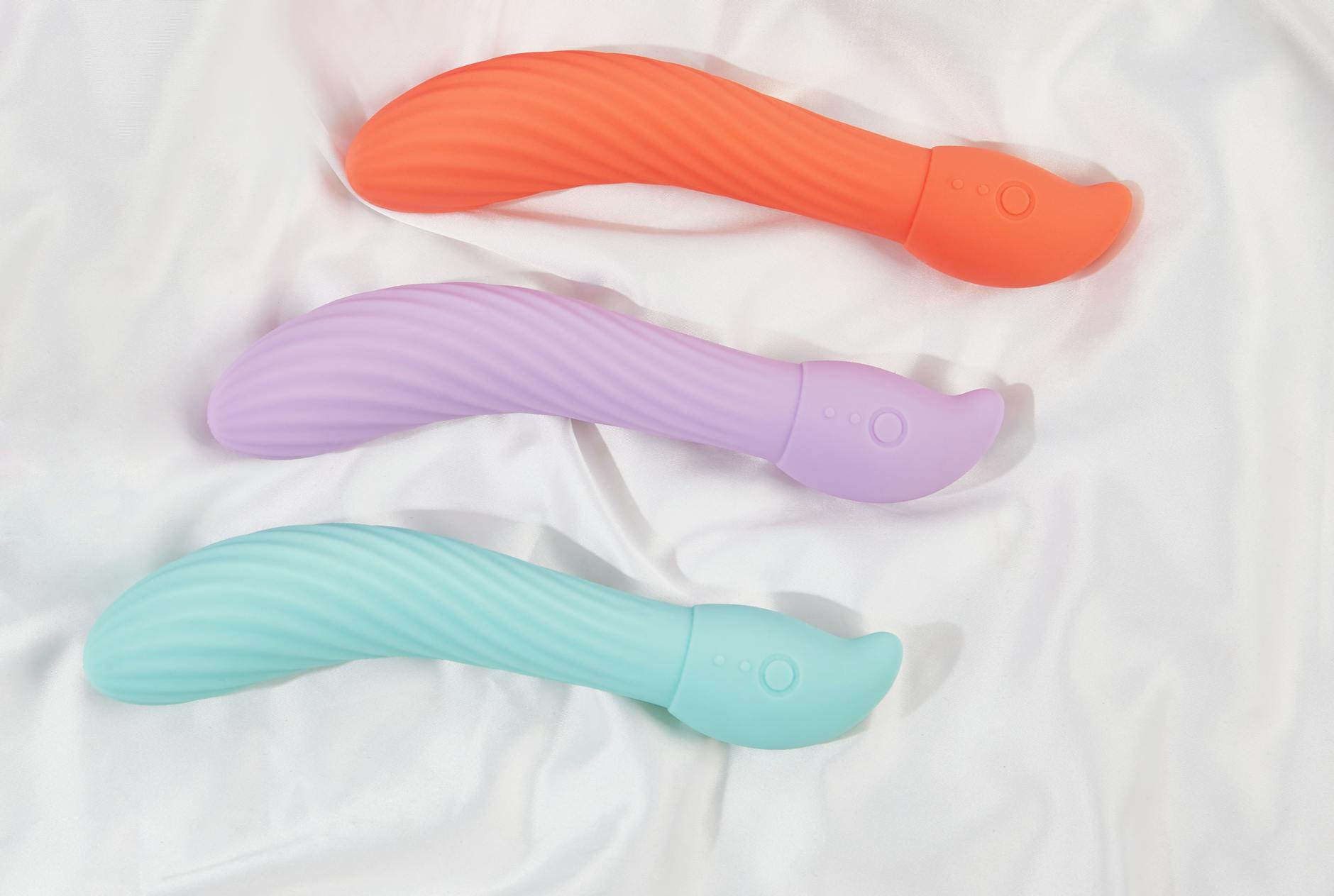
Why Lemon Vibrators Work Better for Sensitive Clitoral Tissue
Air-suction technology stimulates without friction. Here's what that means for your body, and why it matters if you have a sensitive clitoris, thin tissue, or just prefer gentler sensation.
Let's be real: if you've ever tried a standard vibrator that felt too intense, too buzzy, or downright uncomfortable on your clitoris, you're not broken. Your tissue is just telling you something important about what it needs.
Here's the thing. Most vibrators work by oscillating side to side at high frequency. That creates friction and pressure, which works beautifully for some people and feels like someone's drumming on a raw nerve for others. Air-suction clitoral vibrators, like the lemon-shaped designs Hello Nancy makes, operate on a completely different principle. They use gentle pulsing suction rather than vibration. For sensitive clitoral tissue, this is often a revelation.
Your clitoris has about 8,000 nerve endings packed into a tiny area. That density is part of what makes it so capable of pleasure, but it also means the wrong type of stimulation can feel overwhelming fast.
When you use a traditional vibrator, the rapid oscillation creates what's called "mechanical stimulation." The vibration presses against your tissue repeatedly, which can feel sharp or fatiguing if your clitoris is sensitive. Some people love this sensation. Others find it exhausting or even painful after a few minutes.
Air-suction technology works differently. Instead of vibrating, it creates a rhythmic pulse of gentle suction around the clitoral head. This stimulates the nerves without the friction or direct pressure of a vibrator. It's the difference between someone tapping your shoulder repeatedly and someone gently cupping and releasing. Both get your attention, but one is clearly gentler.
First, reduced friction means less inflammation. Sensitive clitoral tissue is often already slightly irritated. It might be that way because of hormonal changes (post-menopause, hormonal birth control shifts), because your natural lubrication is lighter, or simply because that's how your body is built. When you add friction on top of existing sensitivity, inflammation increases. Suction avoids that problem entirely.
Second, suction distributes pressure more evenly. A vibrator's oscillation concentrates sensation in a small, intense point. Suction spreads the sensation across the entire clitoral head and surrounding tissue. That diffusion alone makes it feel less overwhelming to many people.
Third, you can start gentler and build slowly. Most lemon clitoral vibrators have multiple intensity levels, starting extremely low. You're not committing to "vibrator on" at intensity five. You can begin at level one, which feels almost like a whisper, and stay there as long as you want. For sensitive vulvas, this control is essential.
If any of this describes you, a lemon vibrator design is worth trying.
People with naturally sensitive clitorises often report that traditional vibrators feel overwhelming within minutes. The sensation builds too fast, or it becomes uncomfortable rather than pleasurable. Air-suction technology gives you the stimulation without the intensity.
People navigating hormonal shifts, including post-menopause or adjusting to hormonal birth control, often find their clitoral sensitivity changes. The tissue becomes thinner or more reactive. Suction-based stimulation respects that new reality without requiring you to give up pleasure.
People with a history of pain during sex or clitoral touch sometimes discover that traditional vibrators reactivate that discomfort pattern. Suction feels softer, less like pressure, and helps rewire the nervous system's association with touch.
People who simply prefer gentler sensation in general. Not everyone wants intense stimulation. Some of us like to linger in subtler territory. If that's you, a lemon clitoral vibrator lets you stay there without apology.
If you're trying one for the first time, a few things help.
Start with the lowest setting. Genuinely. Turn it on at level one and sit with it. Your clitoris will probably feel curious rather than overwhelmed, which is the goal. You can always increase intensity. You can't undo going too hard.
Use a small amount of water-based lubricant. Air-suction technology doesn't require it the way friction-based vibrators do, but a touch of lube can help the seal feel more comfortable and the sensation feel smoother. Silicone-based lubes will damage silicone toys, so stick with water-based unless your toy is made from a different material.
Angle slightly. The opening of a lemon vibrator is designed to create suction around your clitoral head, not inside. Position it so the opening covers your clitoris comfortably, then let the suction do the work. You don't need to press hard. Gentle contact is the point.
Give yourself five minutes minimum before deciding it's not for you. The sensation is different from what you might be used to. Your nervous system needs a moment to recognize it as pleasure rather than just novel.
Not all suction vibrators are the same, and the lemon shape matters.
The compact, rounded design of a lemon clitoral vibrator gives you precision without bulk. The opening is sized to fit comfortably over your clitoris without covering too much surrounding tissue. That focused contact is what makes the sensation feel concentrated and intentional rather than diffuse.
Larger air-suction toys can feel nice, but they're harder to control and angle. They're also less portable, which matters if you like to use toys during partner sex. A lemon vibrator fits easily into a nightstand or carry bag.
The lemon shape is also genuinely ergonomic. It sits naturally in your hand, and you can angle it intuitively without thinking about it. Design isn't just aesthetics. It's functionality.
One of the most common things I hear from people who switch to air-suction technology is relief. Not just pleasure, but relief. They'd been white-knuckling through vibrator sessions that felt uncomfortably intense, or giving up because nothing felt right. Then they try a lemon vibrator at level two or three and realize: oh, this is what pleasure is supposed to feel like.
Sensation that builds slowly, that you can sustain, that feels good rather than overwhelming. You might even discover that you can have longer sessions, or multiple experiences in one session, because you're not exhausting your clitoris into numbness.
If you're sensitive, that's not a limitation. It's information about what kind of touch works for your body. A lemon clitoral vibrator speaks that language.
They work differently, not better or worse. Traditional vibrators excel at creating intense, rapid sensation. Air-suction vibrators excel at gentler, more sustainable stimulation. For sensitive tissue, suction often works better because it doesn't create friction or overwhelming intensity. What matters is whether it works for you, not whether it works in general.
Absolutely. The compact size makes it easy to incorporate. Some people use it before partnered sex to warm up their clitoris, which can make the rest of the experience more pleasurable. Others use it during penetrative sex for additional clitoral stimulation. You know your body and your partner best. What matters is communication and comfort.
There's no damage threshold for pleasure. Use it as much as you want. If you notice numbness after a session, that's a sign you went hard enough that your nervous system needs recovery time. Take a break, use lower intensity next time, or use it less frequently. Your clitoris has excellent healing capacity and will bounce back.
Most are made from medical-grade silicone and can be cleaned with soap and warm water or a toy cleaner. If yours is waterproof, you can rinse it under running water. Check your specific product instructions. Proper cleaning extends the life of your toy and keeps it hygienic.
Yes. Some people's bodies take a moment to recognize suction as pleasurable sensation. Try it a few times at low intensity before deciding it's not for you. If you genuinely feel nothing after several attempts, you might just prefer friction-based stimulation, and that's fine. Not every toy works for every body.
A partner worth keeping understands that your pleasure is normal, healthy, and worth supporting. If you're worried about judgment, that's worth a conversation with them outside the bedroom. Most partners are relieved to learn what actually feels good for you, because that knowledge makes sex better for both of you.
Sensitivity isn't something to overcome. It's information. If your clitoris prefers gentler, suction-based stimulation, you're not broken or uptight. You just know what works for your body.
Finding a lemon vibrator that fits your needs is part of honoring that knowledge. You deserve pleasure that feels genuinely good, not pleasure you're muscling through. If air-suction technology delivers that, it's worth exploring.
Want to dig deeper into how to choose a toy that matches your body? The buying guide walks through all the shapes and technologies Hello Nancy offers, so you can figure out what might work best for you before you buy.
Graber, B., & Kline-Graber, G. (1979). Female orgasm: Role of pubococcygeus muscle. Journal of Clinical Psychiatry, 40(11), 348-351.
Levin, R. J. (2003). The mechanisms of human sexual arousal. Annual Review of Sex Research, 14(1), 1-45.
May, A. M., & Veale, D. (2010). Psychosexual assessment of erectile dysfunction in older men. The Journal of Sexual Medicine, 7(7), 2581-2591.
Olsson, A., & Bergström, G. (2020). Exploring sexual health experiences of women with musculoskeletal disorders. Journal of Sex and Marital Therapy, 46(2), 138-152.